Performativity of Old Testament Verses: Proverbs (9:1-6) in the Liturgy and Church Decoration in the Late Medieval Balkans

  Tomić, Marka. 2025. “Performativity of Old Testament Verses: Proverbs (9:1-6) in the Liturgy and Church Decoration in the Late Medieval Balkans.” In “Performance and Performativity in Late Antiquity and Byzantium,” ed. Niki Tsironi, special issue, Classics@ 24. https://nrs.harvard.edu/URN-3:HLNC.ESSAY:104135618.


Wisdom has built her house;
she has set up its seven pillars.
She has prepared her meat and mixed her wine;
she has also set her table.
She has sent out her servants, and she calls
from the highest point of the city,
“Let all who are simple come to my house!”
To those who have no sense she says,
“Come, eat my food
and drink the wine I have mixed.
Leave your simple ways and you will live;
walk in the way of insight”

Proverbs (9:1–6)

1. Introduction

The personified Divine Wisdom building a house for herself was understood—in line with the Byzantine teaching about the connection between the Old and New Testament —as the incarnate God dwelling in the flesh. The attempt to trace and define the performative capacities of the Old Testament verses (Proverbs 9:1–6) in monumental decoration involves the consideration of the complexity of the relationship between painted text and images in a ritual setting. To a much greater extent than other painted monuments of the Palaiologan era, the frescoes of thirteenth- and fourteenth-century Serbian churches display a subtle and polysemic relationship between imagery and text, which was adopted from Byzantine culture and further developed in the Serbian milieu.
In attending to the performativity of Old Testament verses (Proverbs 9:1–6), the following discussion is concerned with the questions of the relationship between the theological, liturgical-hymnographic sources and the manners in which Wisdom imagery was formulated in church decoration in the Late Medieval Serbian lands. We will explore monumental representations of Divine Wisdom and Wisdom’s Feast in Serbian churches within the wider artistic, religious, and cultural context of the Late Medieval Balkans.

2. Book of Proverbs (9:1–6): liturgical ritual and visual forms of representations

The Byzantine liturgy sees in Solomon’s famous verses on Wisdom (Book of Proverbs, 9:1–6) an Old Testament announcement of two great mysteries—the Incarnation of the Divine Logos and the Eucharist. Both interpretations—Christological and Eucharistic—were reflected in the contents of the painted decoration of the Late Medieval Balkan churches. Тhe liturgical usage of the text reflects the Greek patristic legacy and the well-defined theological interpretation of the dogma of the Incarnation and celebration of the Virgin as the temple and dwelling of the Divine Wisdom.
A verse from the Old Testament Book of Proverbs (9:1) was read as a paroimia at Vespers marking the feast days of the Nativity of the Mother of God, Annunciation and Dormition. [1] The same quotation was also read as part of paroimia at Vespers on Christ’s feasts—Mid-Pentecost and the Presentation of Christ in the Temple. [2] Finally, there is another liturgical context where Proverbs 9 makes an appearance. The verses 9, 1–5 are included in the Service of the Consecration of a Church (ἐγκαίνια) [3] prescribed in Greek and Serbian medieval euchologia. [4] The system of prayers during the consecration of a liturgical space reflects the ancient theological belief about Solomon’s temple as an Old Testament prefiguration of the Christian Church established by the Savior.

The content of Proverbs (9:1–5) performed at the liturgy also took a visual form of representation in monumental painting. In line with different liturgical contexts, the first verse from Solomon’s Book of Proverbs accompanies the figure of this Old Testament king and prophet within several thematic ensembles, some of which are an integral part of monumental church decoration in Medieval Balkans. It is often written on a scroll in the hand of Solomon, who is invariably depicted among the prophets in the domes of Byzantine and Serbian churches churches (Mother of God Peribleptos in Ohrid, 1294/1295, Figure 1; Mother of God Hodegetria at the Patriarchate of Peć, between 1335 and 1337, Figure 2; Markov Manastir, 1376/1377; Ravanica, ca. 1385). [5] Regarding the prophet cycles of the Palaiologan era, it bears emphasizing that the selection of Old Testament figures and prophetic messages was based on the liturgical practices and theological intricacies of this period. The text on Solomon’s scroll belongs to the quotations from Old Testament stories that explain the meaning and mystery of Christ’s incarnation.
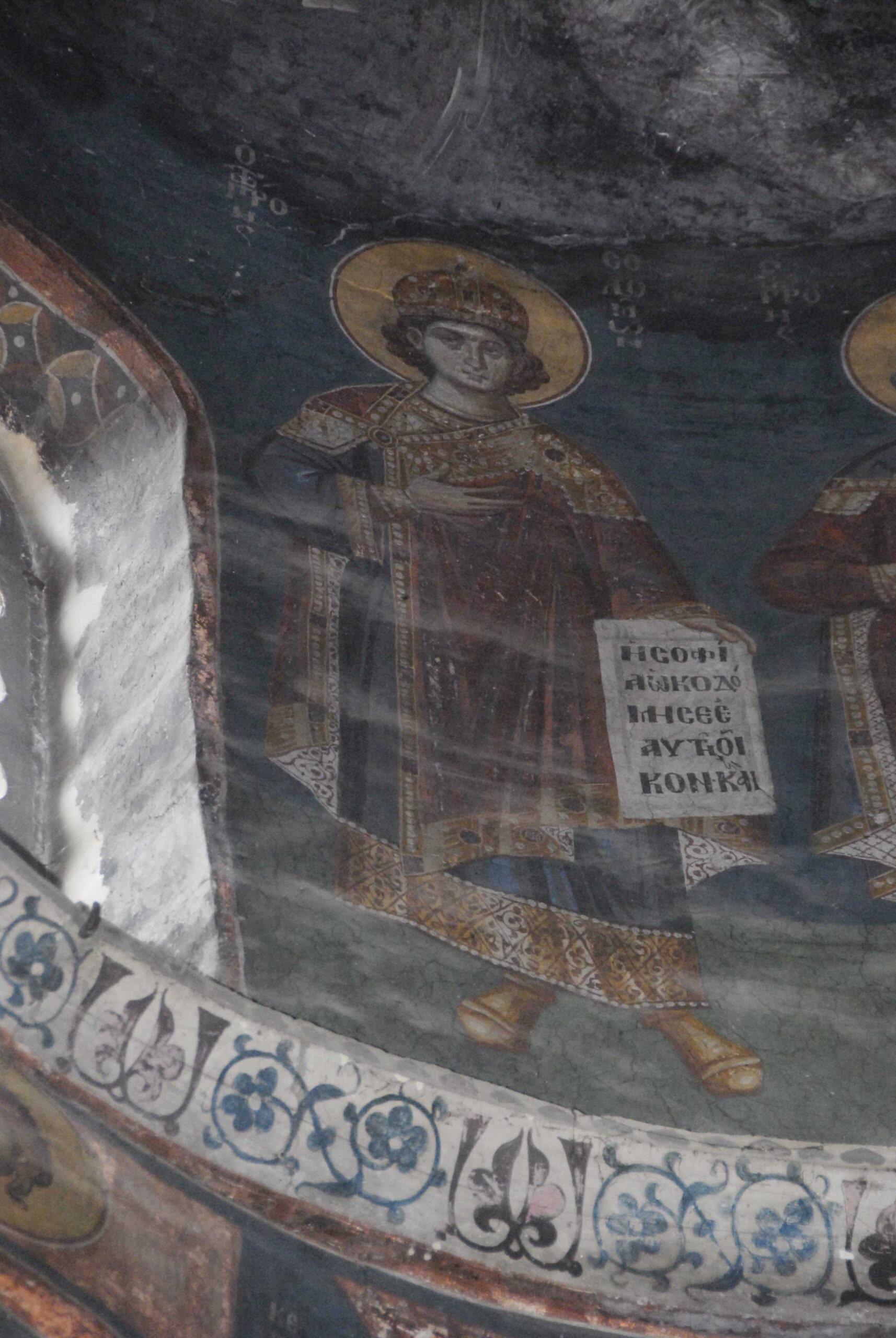
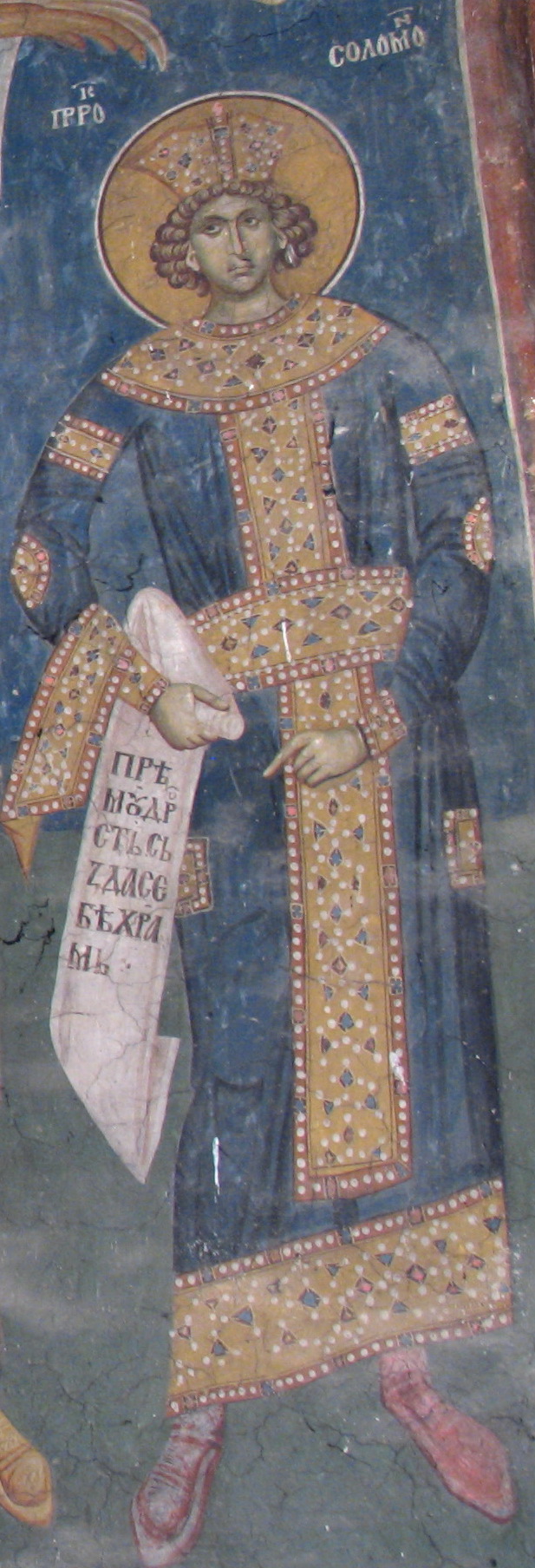
Figure 1. N. Macedonia, Ohrid, Mother of God Peribleptos, Old Testament king and prophet Solomon, 1294 /1295.
Figure 2. Serbia, Kosovo, Mother of God Hodegetria at the Patriarchate of Peć, Old Testament king and prophet Solomon, between 1335 and 1337.

In addition, his image with a scroll quoting verse 9:1 is often found in the festal scene of the Annunciation (Mileševa, between 1220 and 1227; Sopoćani, ca. 1365, Figure 3; St. Achilleos in Arilje, 1296; Markov Manastir, Figure 4 and 5). [6]
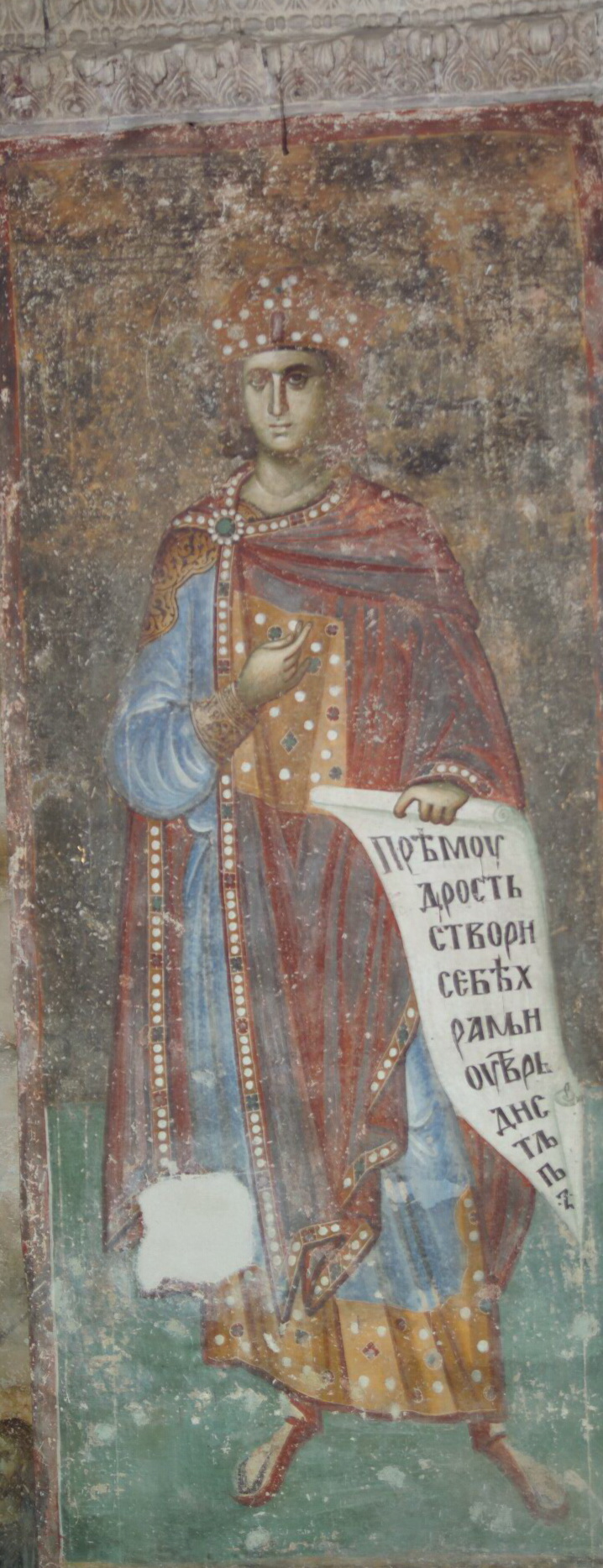
Figure 3. Serbia, Sopoćani monastery, Old Testament king and prophet Solomon from the Annunciation, ca. 1365.

The historicity of Christ’s incarnation is indicated through the joint representation of David and Solomon—both kings of Judah, prophets, and forebears of the Lord. [7] A deeper conceptual connection with the Annunciation is suggested by the texts on their scrolls (Solomon, Prov. 9:1; David, Ps. 44,11), which begin to appear from the tenth century onward and become far more frequent later. [8]
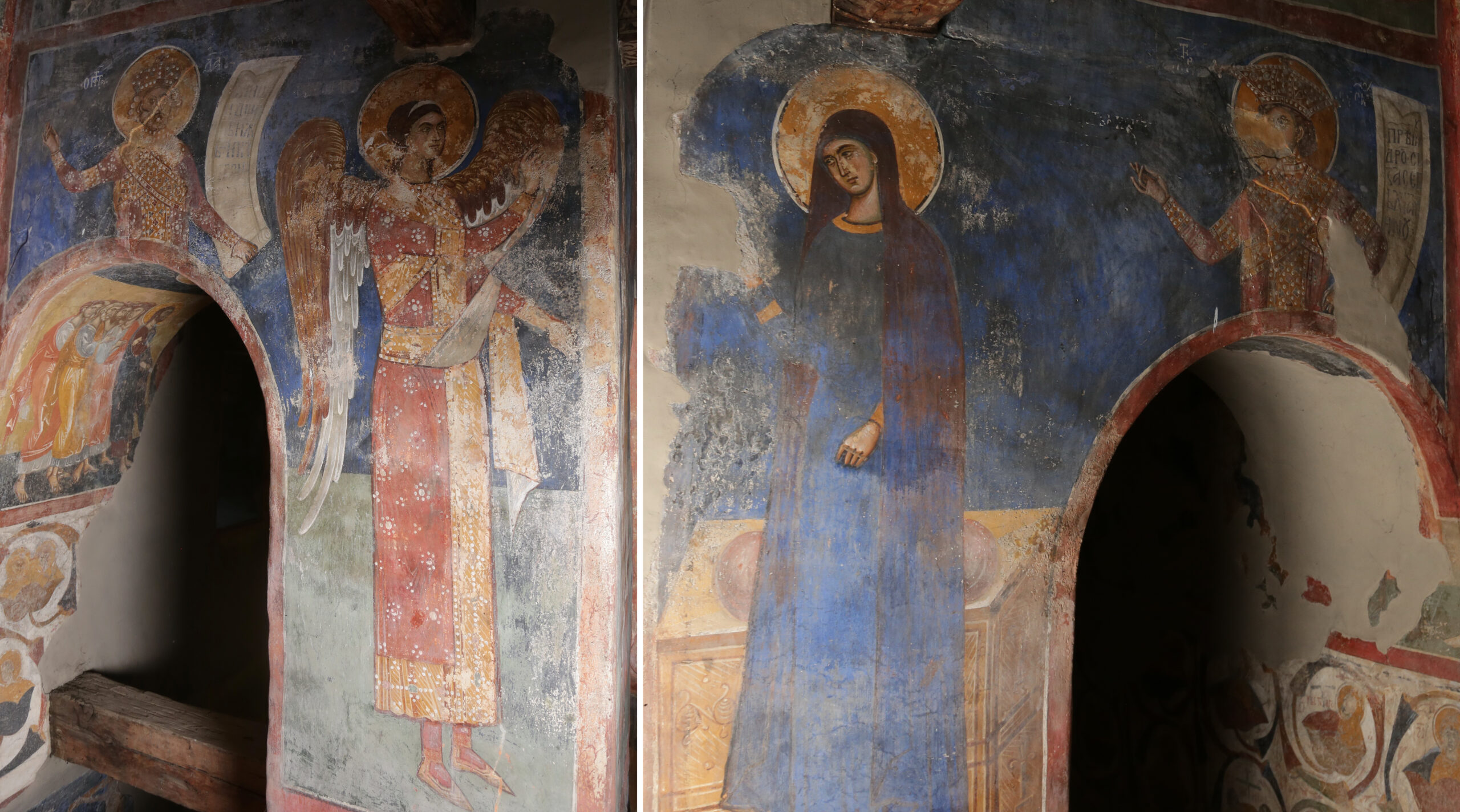
Figures 4 and 5. N. Macedonia, Church of St Demetrios at Markov Manastir near Skopje, (4) Old Testament king and prophet David and archangel Gabriel from the Annunciation, (5) Old Testament king and prophet Solomon and Virgin Mary from the Annunciation, 1376/1377.

In the next stage of Byzantine liturgy, in parallel with the Christological one, the Eucharistic interpretation of Proverbs (9:1–6) emerged, which sees the Old Testament allegory about the feast of Holy Wisdom as the prefiguration of the institution of the Eucharist, the most important ritual foundation of the earthly church. The enriching of the liturgy of the Great Church of Constantinople with the poetic hymnody of Palestinian monastic rites, among them poetic pieces of Holy Thursday, is assumed to have been an important process in the history of the liturgy, which started in the ninth century and was only completed in the twelfth. [9] The iconographic response to this liturgical overtone, however, did not appear before the late thirteenth century and the Palaiologan era that brought the expansion of painted programs and a more elaborate arsenal of Old Testament symbolic images. Particularly distinctive for its thematic and iconographic characteristics is the composition Wisdom has built her house, whose iconographic form was directly inspired by the verses in Proverbs (9:1–6). [10] The theme of personified Divine Wisdom inviting people to accompany her to a Feast appeared in Byzantine art in the late thirteenth century (Mother of God Peribleptos in Ohrid, 1294 /1295), (Figure 6) [11] and further developed in the Serbian artistic milieu (Gračanica,ca. 1320, Figure 7; [12] katholikon of Hilandar Monastery, 1321, restored 1804; [13] Dečani Monastery, Church of Christ Pantokrator, ca. 1343 [14] , Figure 8), with some examples also found in Russia (Dormition Church in Volotovo near Novgorod, 1363) [15] and Georgia (Zarzma, middle of the fourteenth century). [16]
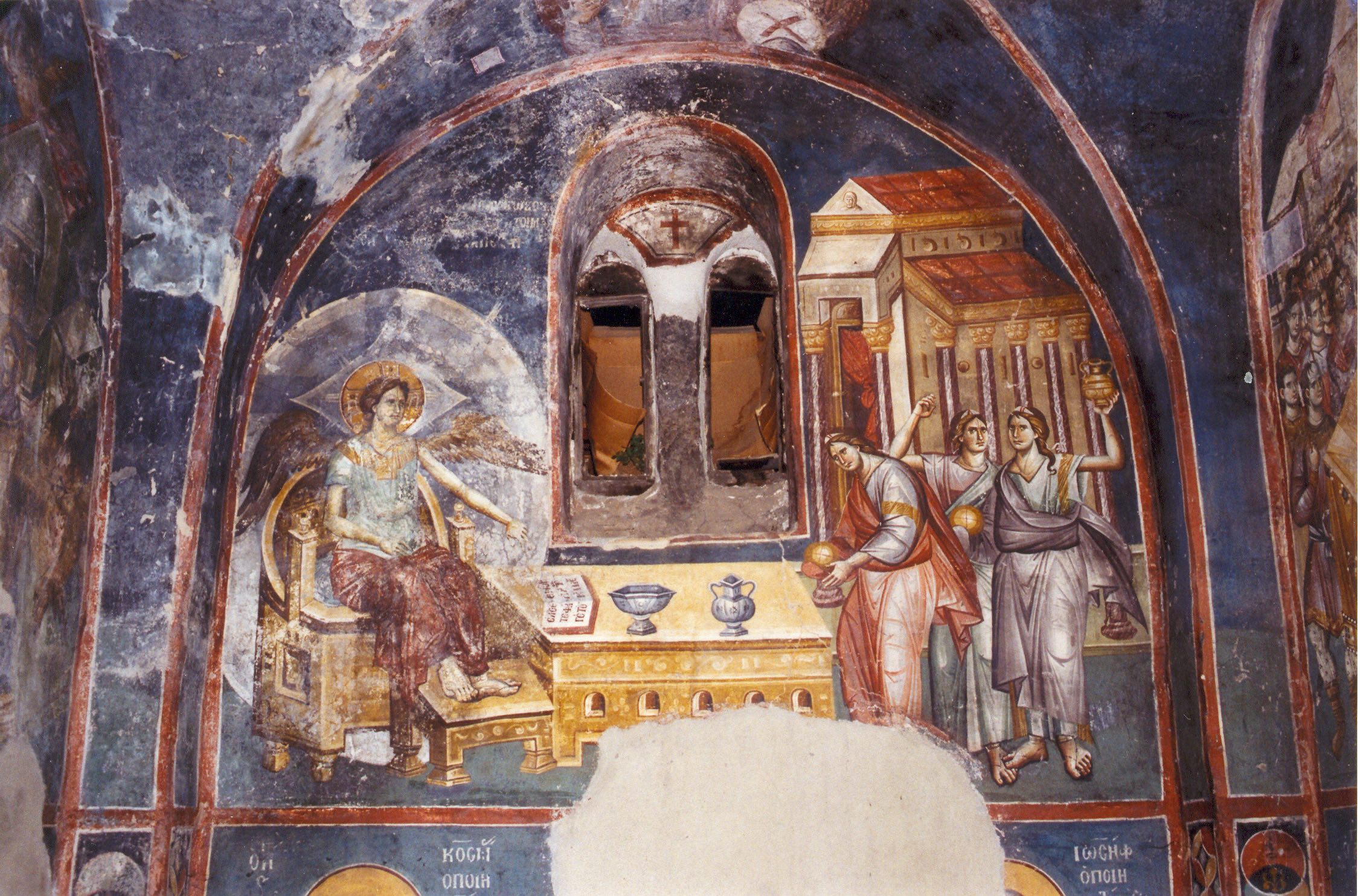
Figure 6. N. Macedonia, Ohrid, Mother of God Peribleptos, Wisdom has built her house, 1294/1295.

This group of paintings shares the same visual articulation of the Old Testament poetic image—Holy Wisdom sitting at a table, in some cases in the form of a three-headed figure as the personification of the three hypostases of the Holy Trinity, surrounded by servants in front of the Temple of Seven Pillars.
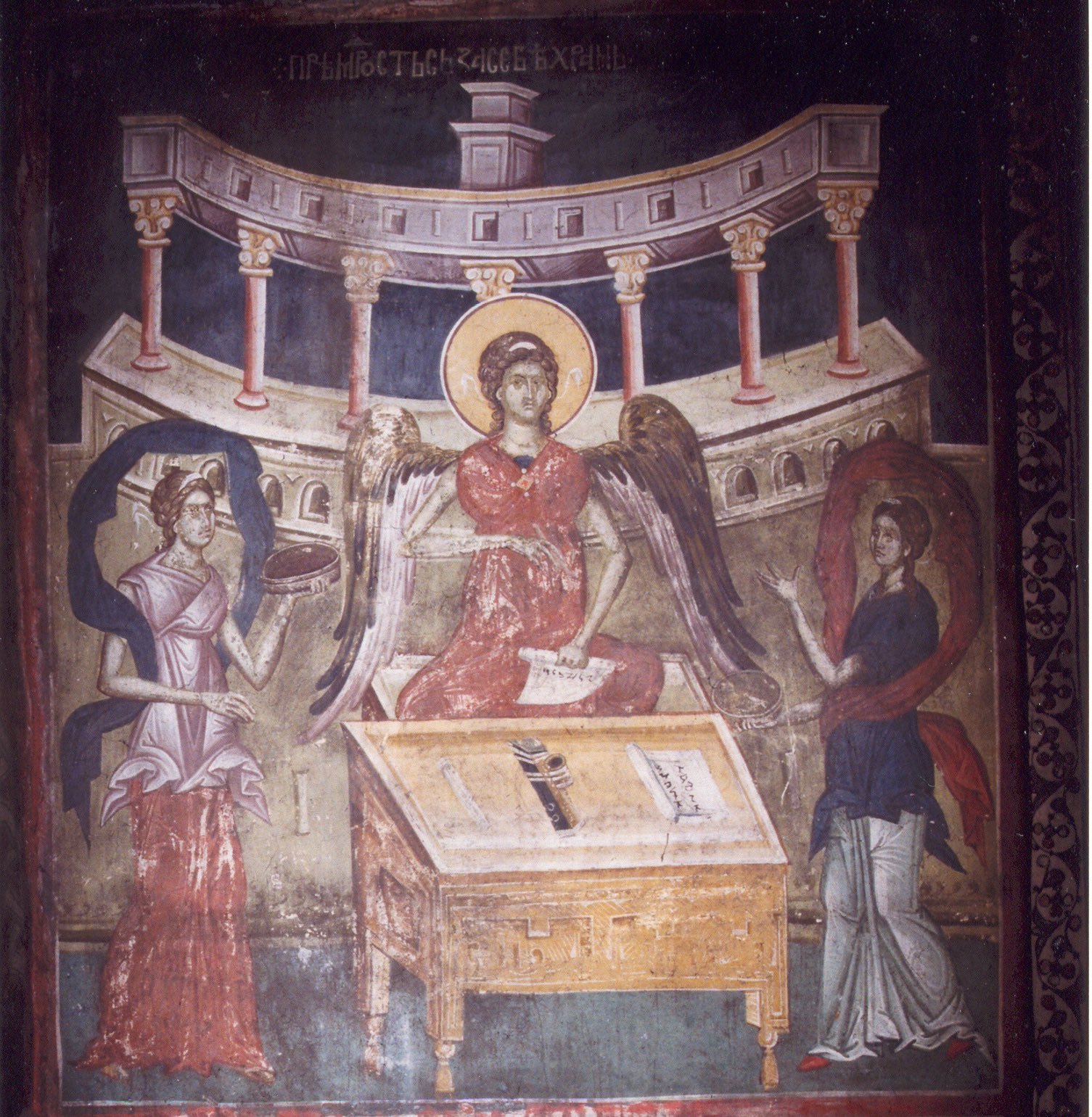
Figure 7. Serbia, Kosovo, Gračanica monastery, Wisdom has built her house, ca.1320.

Unique in its extensiveness and narrativity is the Holy Wisdom theme at Dečani, which unfolds in four episodes. [17] The last two are particularly notable: they illustrate the fifth verse, “Come, eat my food and drink the wine I have mixedˮ and show angels giving people communion with bread and wine. [18]
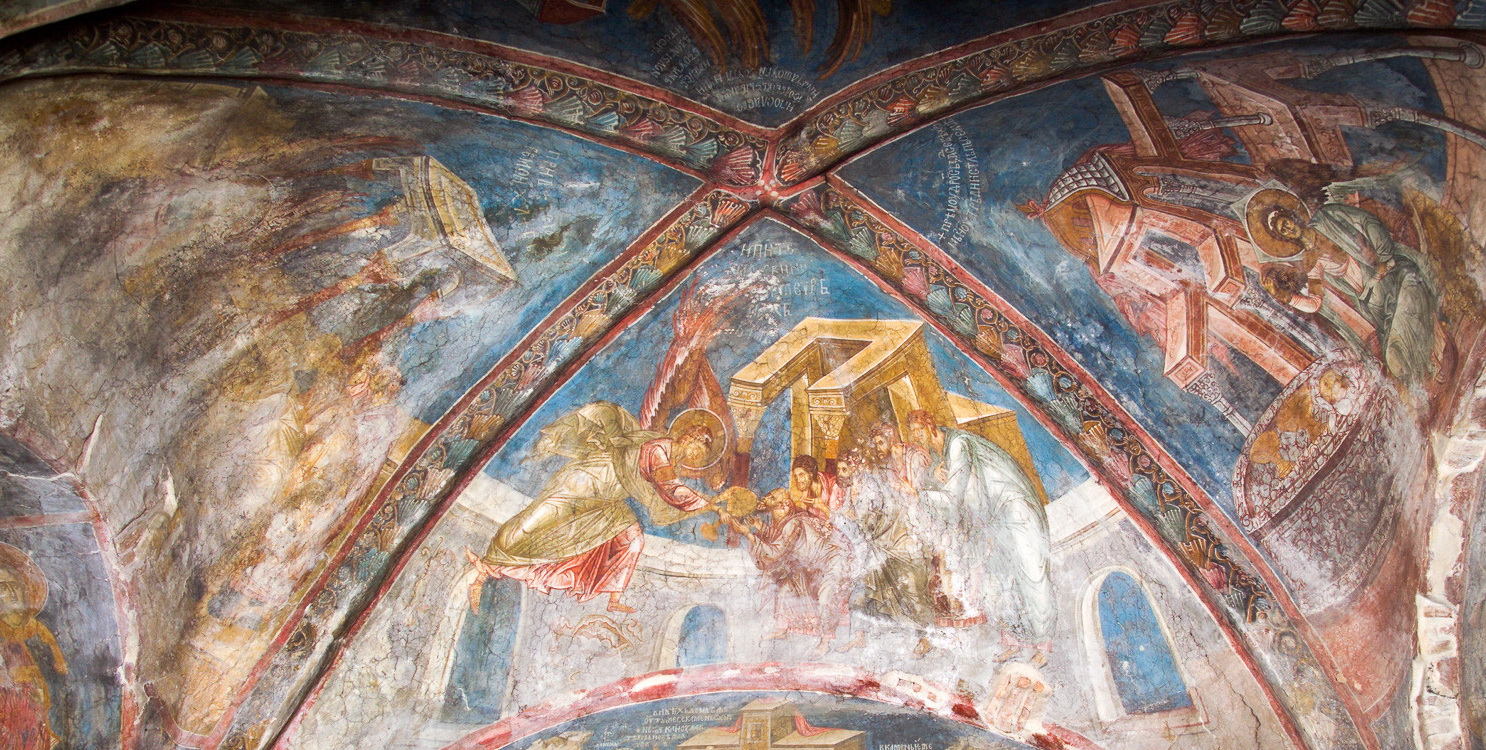
Figure 8. Serbia, Kosovo, Dečani Monastery, Church of Christ Pantokrator, Wisdom has built her house, ca. 1343.

However, two further examples that can be added to this brief survey are particularly noteworthy—the Transfiguration parekklesion in Hrelja’s Tower of the Rila Monastery (1334/1335), (Figure 9a, 9b) [19] and Markov Manastir near Skopje (1376/1377), (Figure 10), [20] where the abstract theological thought on Holy Wisdom, inspired by Proverbs 9:1–6, was given not only a considerably different but also a much more complex iconographic elaboration in comparison with the other examples. Moving away from the literal illustration of Old Testament verses, painters and commissioners of the frescoes in Rila and later in the Church of St. Demetrios in Markov Manastir designed an original ensemble that draws on the poetic hymnody of Holy Thursday and theological treatises. These two painted programs should be seen as the ultimate examples of the very close ties between liturgy and symbolical-metaphorical imagery.
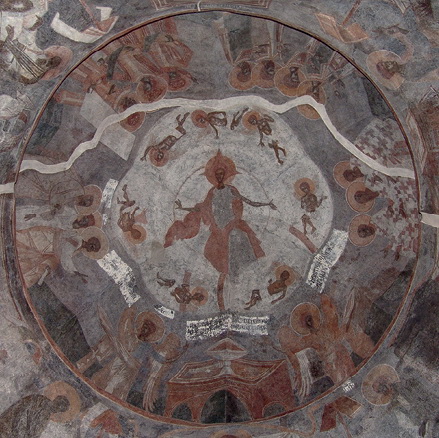
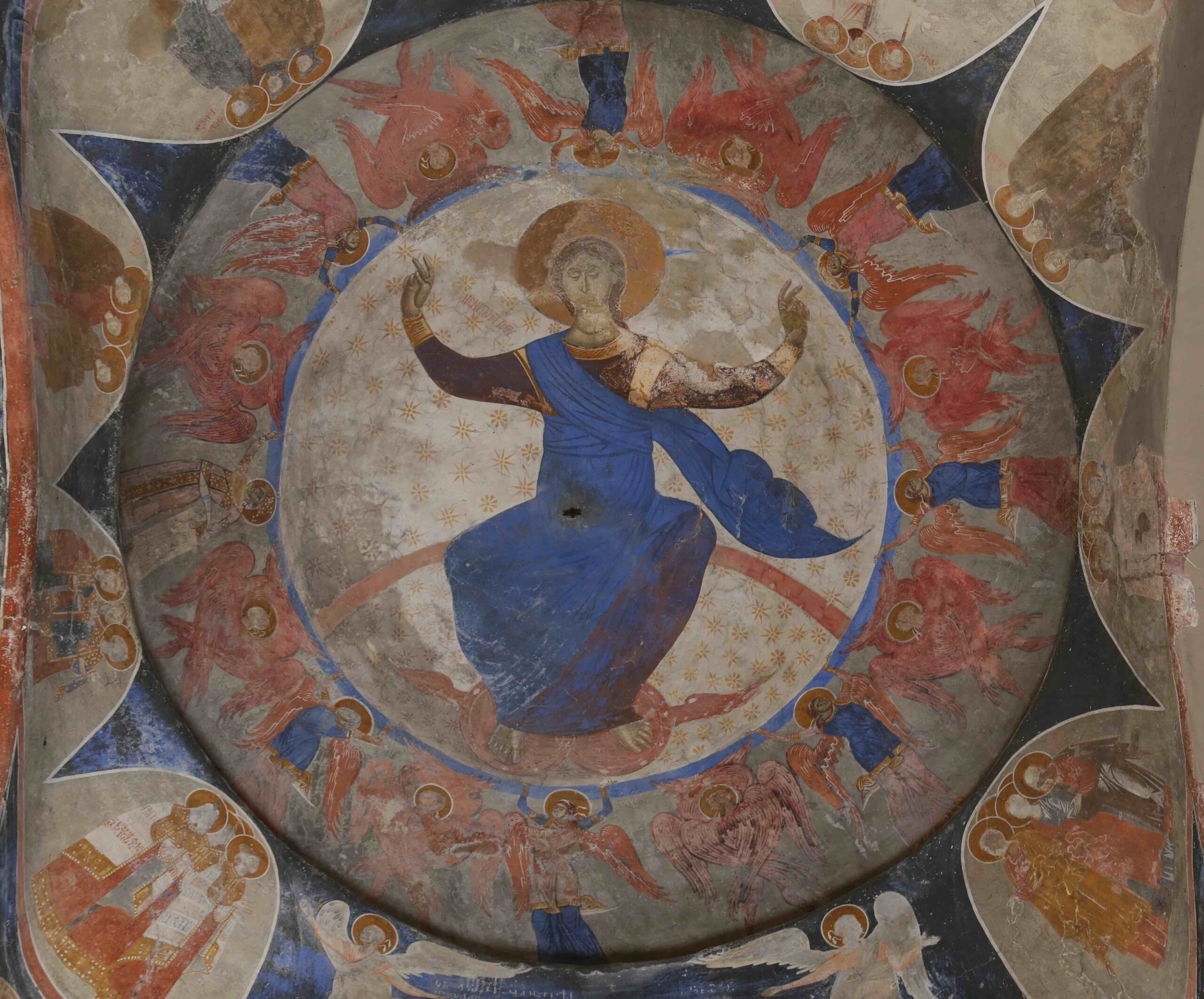
Figure 9. Bulgaria, the Transfiguration parekklesion in Hrelja’s Tower of the Rila Monastery, Wisdom’s Feast, 1334/1335.
Figure 10. N. Macedonia, Church of St Demetrios at Markov Manastir near Skopje, Wisdom’s Feast, 1376/1377.

3. The Feast of Holy Wisdom in Hrelja’s Tower at the Rila Monastery (1334/1335) and in Markov Manastir (1376/1377)

In 1334/1335, one of the most prominent nobles under the Serbian king Dušan, protosebastos Hrelja, built and frescoed a tower (pyrgos) at the Monastery of St. John of Rila, the cultic center of this important Balkan hermit and saint, which had become part of the Serbian state after the Battle of Velbuzhd (1330). [21] Above the naos of the Transfiguration parekklesion on the upper story of the tower, in a blind dome, there is the Old Testament allegory about the feast of Holy Wisdom (Figure 9). At the center of the composition is Holy Wisdom on a rainbow in a mandorla surrounded by seven Gifts of the Holy Spirit in the form of seven semi-nude winged figures, and in the register below the Table of Wisdom approached by groups of bishops (Figure 11) and martyrs on one side and apostles and Old Testament kings on the other. In the last group, Solomon stands out in imperial ornate, pointing to Holy Wisdom in glory above him with one hand and holding a scroll with a quote from Proverbs (9:1) in the other (Figure 12). The remaining verses (9:3–5) are written on three scrolls arranged on the north, south and east side of the composition’s lower segment. [22]
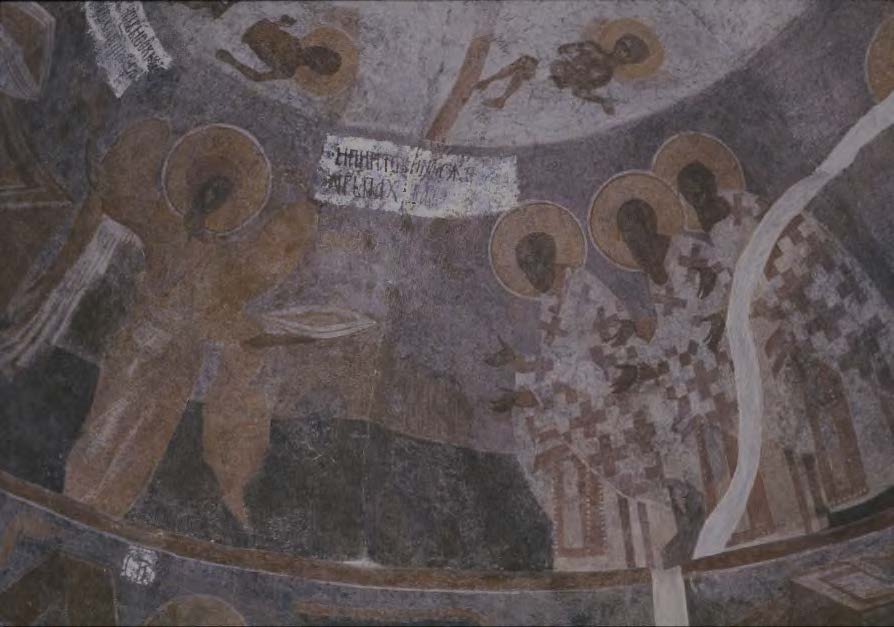
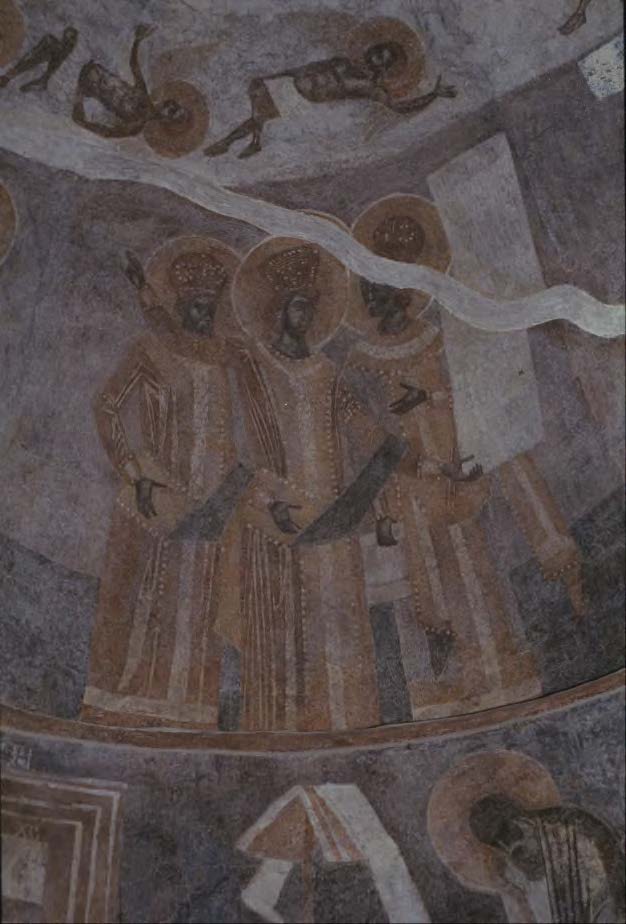
Figures 11 and 12. Bulgaria, the Transfiguration parekklesion in Hrelja’s Tower of the Rila Monastery, Wisdom’s Feast, detail, 1334/1335.

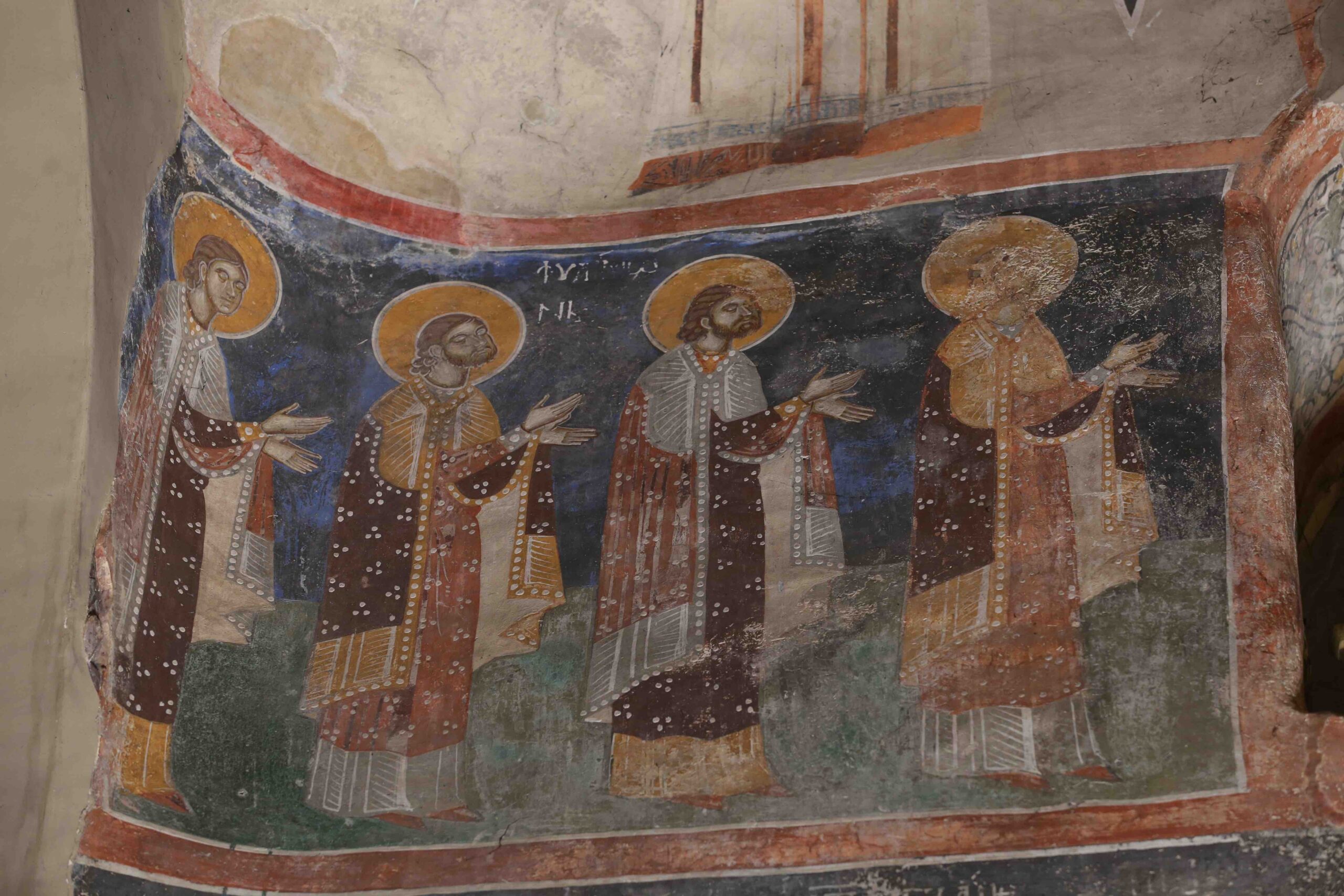
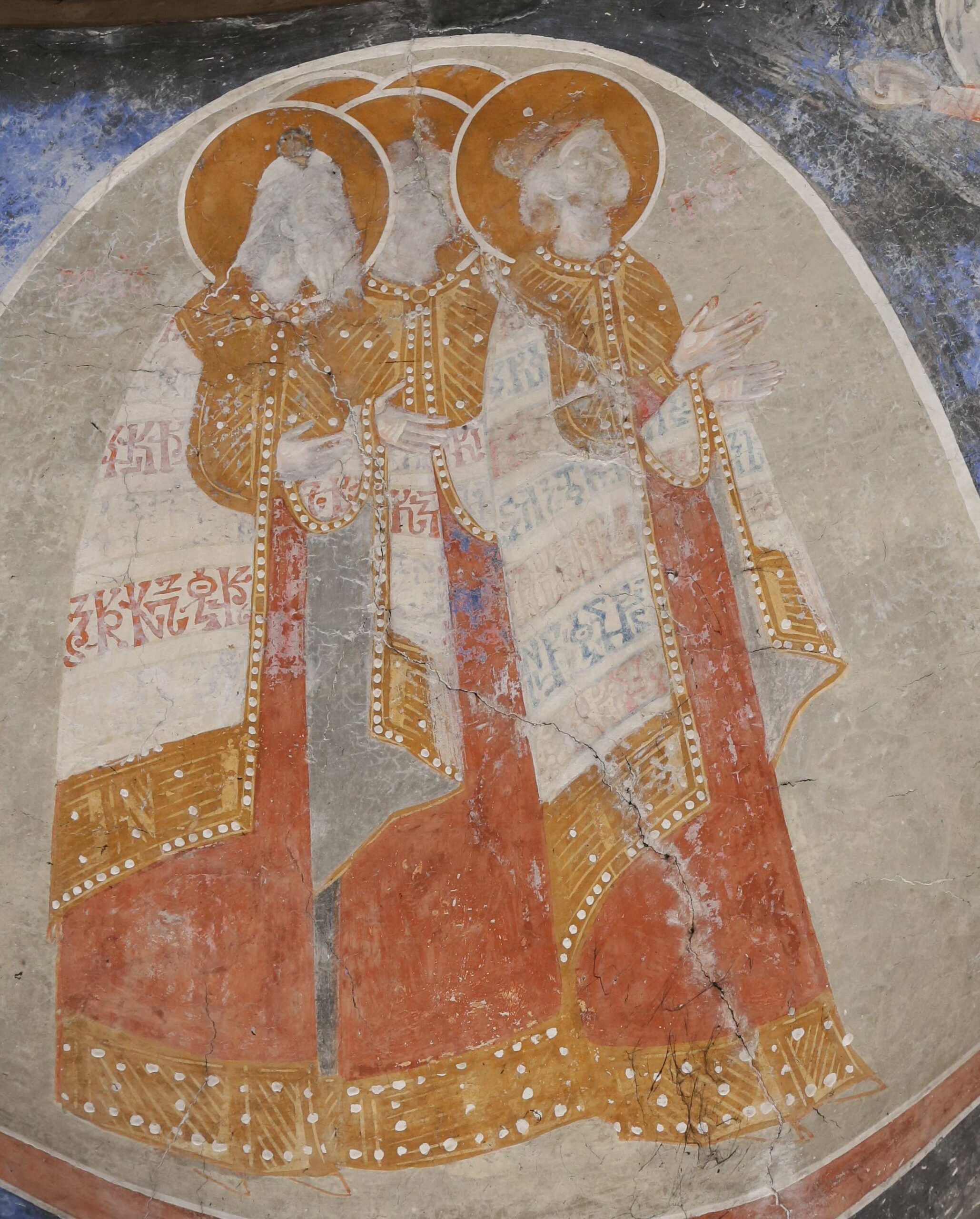
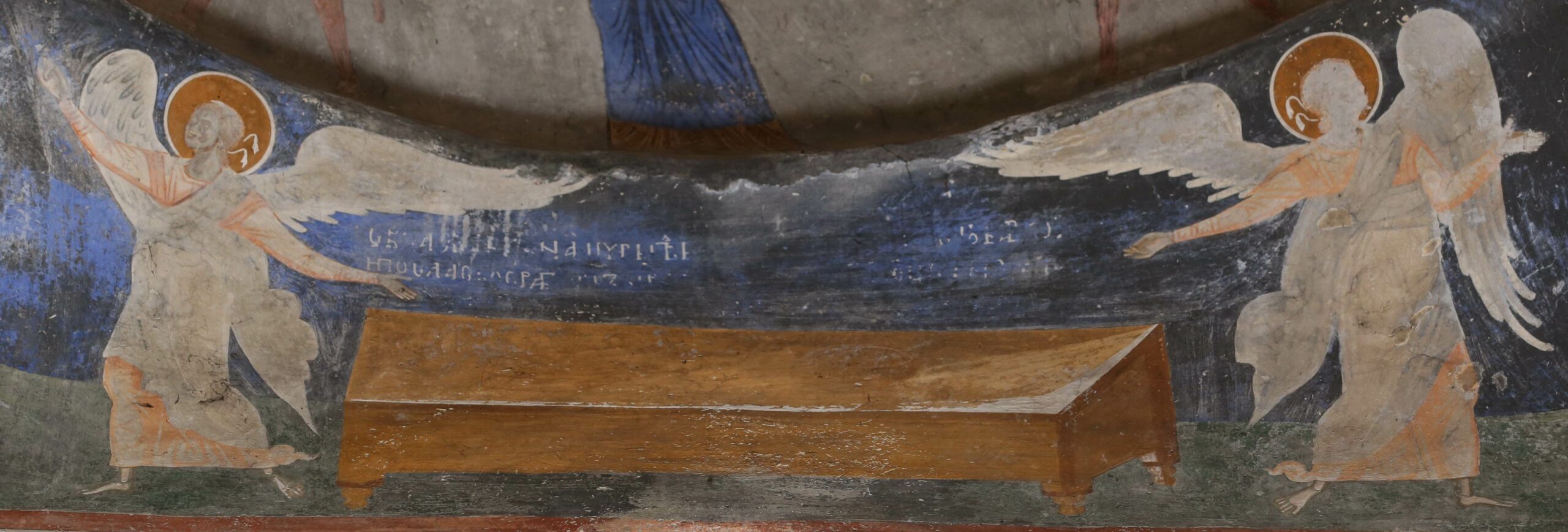
More than four decades later, another relevant fresco was painted above the narthex of the Church of St. Demetrios at Markov Manastir, an endowment of the Serbian kings Vukašin and Marko Mrnjavčević (1376/1377). [23] The blind dome and upper walls of the narthex display a complex composition whose programmatic focus is on Christ as the embodiment of the Wisdom of the Word of God (Η ΕΝΥΠΟСΤΑΤΟС ΤƔ Θ(ΕΟ)Υ / ‹ΛΟΓΟΥ СΟΦΙΑ›), (Figures 10 and 13). God the Son in glory is shown seated on a red rainbow arc and blessing with both hands. Christ’s youthful image originally was surrounded with yet another, lozenge-shaped mandorla. His star-studded aureole is carried by seven winged figures personifying the seven Gifts of the Holy Spirit (Is. 11:2), defined by inscriptions as: the Spirit of Knowledge, the Spirit of Counsel, the Spirit of Fortitude, the Spirit of Piety, the Spirit of Wisdom, the Spirit of Understanding, and the Spirit of the Fear of the Lord (Figure 14). Quite expectedly, the iconographic emphasis is on the symbolism of the Temple of Wisdom, and so an eighth figure, instead of a personification of the Spirit of the Lord, represents the Old Testament prophet and king Solomon with a scroll inscribed with a quotation from the first verse of the ninth chapter of the Book of Proverbs (Figure 15). Between the personifications of the Gifts of the Holy Spirit and King Solomon are eight six-winged seraphim shown in profile. They are stepping forward with their arms extended prayerfully towards the figure before them. The third segment of the composition, arranged around the ring enclosing the personifications of the Gifts, the seraphim, and Solomon, contains, on the east side, a table approached by the righteous grouped into nine choirs (the Old Testament prophets, male and female martyrs, nuns and ancestors, and, on the south side, the apostles, bishops, monks, and deacons) (Figure 16). An angel clad in a chiton and himation stands at either end of the table, pointing to the bread and wine on the table with one hand and inviting the saints with the other. The images of the chalice with wine and the paten with bread on the table used to be more visible, and so was the fragmentarily preserved inscription with a quotation from the Book of Proverbs (9:1–5, Figure 17). The fourth, and last, segment of the composition occupies the upper register of the walls. Below the choirs of the righteous and the table of Holy Wisdom, there are on the east and west walls sixteen figures of martyrs approaching the immortal table from the north and south sides in processions of four. Based on the surviving inscriptions, the figures on the west wall are known to represent: Thyrsos, Leukios, Philemon and Apollonius (south group) (Figure 18); and on the east wall, Manuel, Sabel, and Ismael (north group). If we take common origin as a clue to the identity of the fourth martyr in the latter group, then he may be St. James the Persian. An example is provided by Dečani, where the four martyrs are portrayed together. The group of martyrs on the north side of the west wall is difficult to identify without inscriptions and specific iconographic traits, and the question of their identity remains open. By contrast, four youths with short curly hair and caps on their heads on the south side are easy to identify as three Jewish boys, Ananias, Azarias, and Misael, and the prophet Daniel. [24]
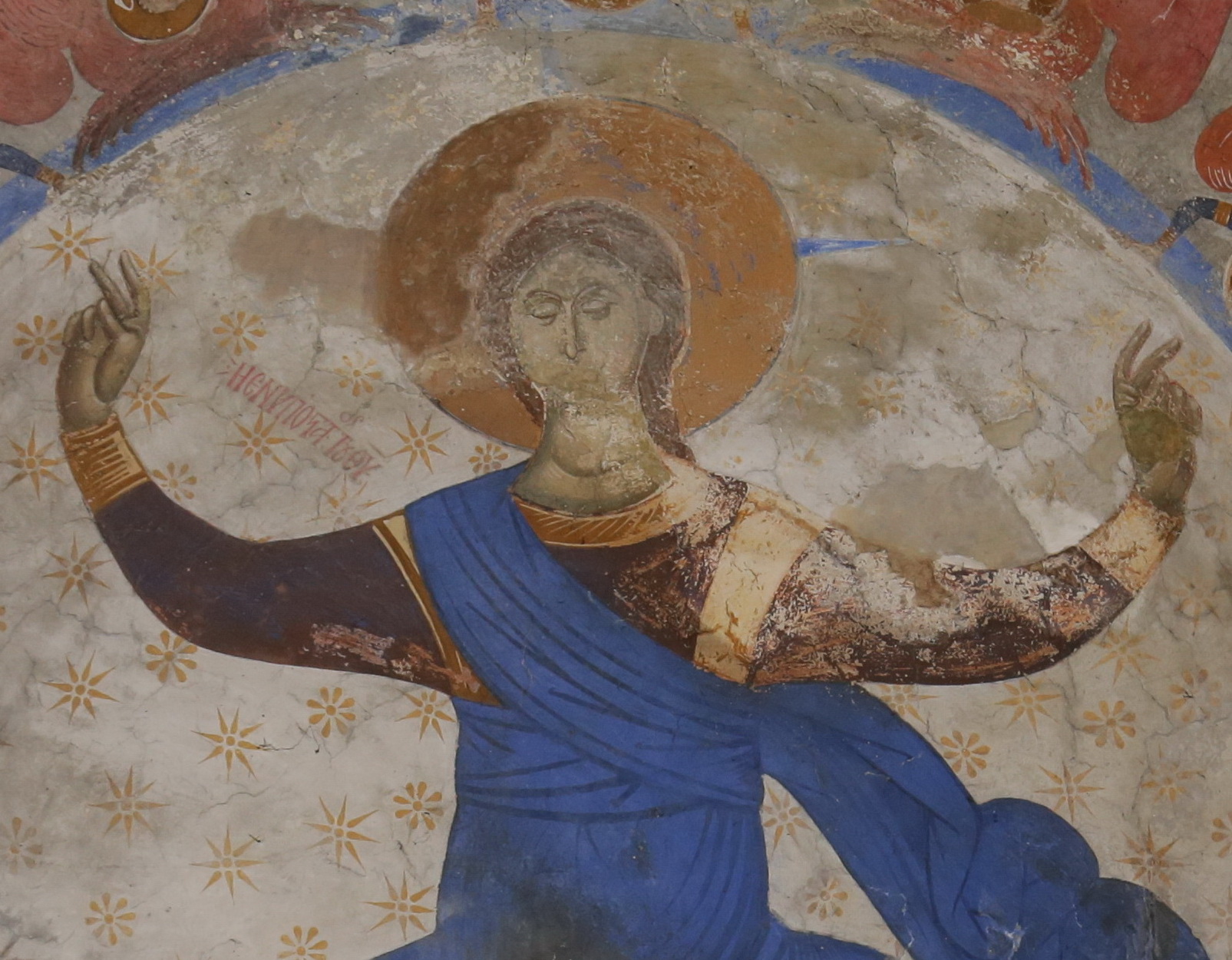
Figure 13. N. Macedonia, Church of St Demetrios at Markov Manastir near Skopje, Wisdom’s Feast, detail, 1376/1377.
Although the two examples are highly original visual representations of the Wisdom allegory, the basic iconographic concept and some segments of their compositions are nonetheless indebted to earlier iconography. [25] The image of Christ in Glory used elements of the imagery of theophany. As in the Ascension or the Second Coming, Christ seated on a rainbow—the Lord’s throne—is carried and glorified by heavenly powers. [26] A considerable similarity in idea and iconography is also observable in Old Testament theophanies of the pre-incarnate, eternally young Logos surrounded by Uncreated Light (the Visions of the Prophets Isaiah and Ezekiel, Christ the Angel of the Great Council). [27] The choirs of the righteous in particular may be traced to the iconography of the Last Judgment, where they were painted under the influence of John Chrysostom’s Second Homily on the Cross. [28] Finally, the close visual-verbal interaction—long inscriptions that are direct quotations from the Proverbs—was a routine element of the so-called narrative mode in Late Byzantine painting. [29]

The compositions in Hrelja’s Tower at the Rila Monastery and in Markov Manastir have their closest parallels in the later examples of Holy Wisdom with the personifications of the Gifts of Holy Spirit, those in the katholikons of Morača (after 1617) [30] and Nikolje (1697). [31] While on the whole both examples of the Old Testament allegory of Wisdom employ the same iconographic strategy and language, subtle differences between Rila and Markov Manastir can be detected. While the older iconographic solution of the personified Divine Wisdom was retained at Rila, in Markov Manastir, the image and the accompanying inscription emphasize the representation of Christ as the embodiment of the Wisdom of the Word of God. Further, it is important to note that, at Rila and Markov Manastir, the seven pillars of Solomon’s temple, shown in the group of Wisdom has built her house images as painted architecture, acquired the form of personified Gifts of the Holy Spirit, albeit based on different formal models. This iconographic transformation of the theme of Wisdom’s Feast reveals a deeper conceptual link with Isaiah’s prophecy about the eight Gifts of the Holy Spirit that rest on the tree of Jesse (Is. 11:1–2). [32] However, the content of this text would not keep its original form in later interpretations. Let us recall the influential view of John Chrysostom, who—drawing on the prophet’s quote (Is. 11:1–2)—speaks of the seven pillars of Solomon’s temple that represent the seven Gifts of the Holy Spirit. [33] Besides theological texts, the symbolism of the temple of Wisdom would also become dominant in iconography, which, as we have seen, began to deviate from the basic literary source. [34] Nonetheless, it should be noted that, in the iconographic structure of the composition in Markov Manastir, Solomon’s figure, as the replacement of the Spirit of the Lord, is grouped in the segment of the composition with the personifications of the Gifts of the Holy Spirit, while in Rila it belongs to the thematic group of the righteous—the Old Testament kings. The direct link with the prophetic verses (Is. 11:1–2), however, survived in the later period, as evidenced by the Feast of Holy Wisdom in Morača, where the composition includes the figure of the prophet Isaiah with the above-mentioned quote. [35] Finally, the Feast of Holy Wisdom in Markov Manastir has richer thematic contents than the older example. The group of sixteen martyrs approaching the immortal table in processions, their hands raised in supplication—the iconographic mark of the apostles approaching to receive Holy Communion—additionally underlines the Eucharistic symbolism of the image.
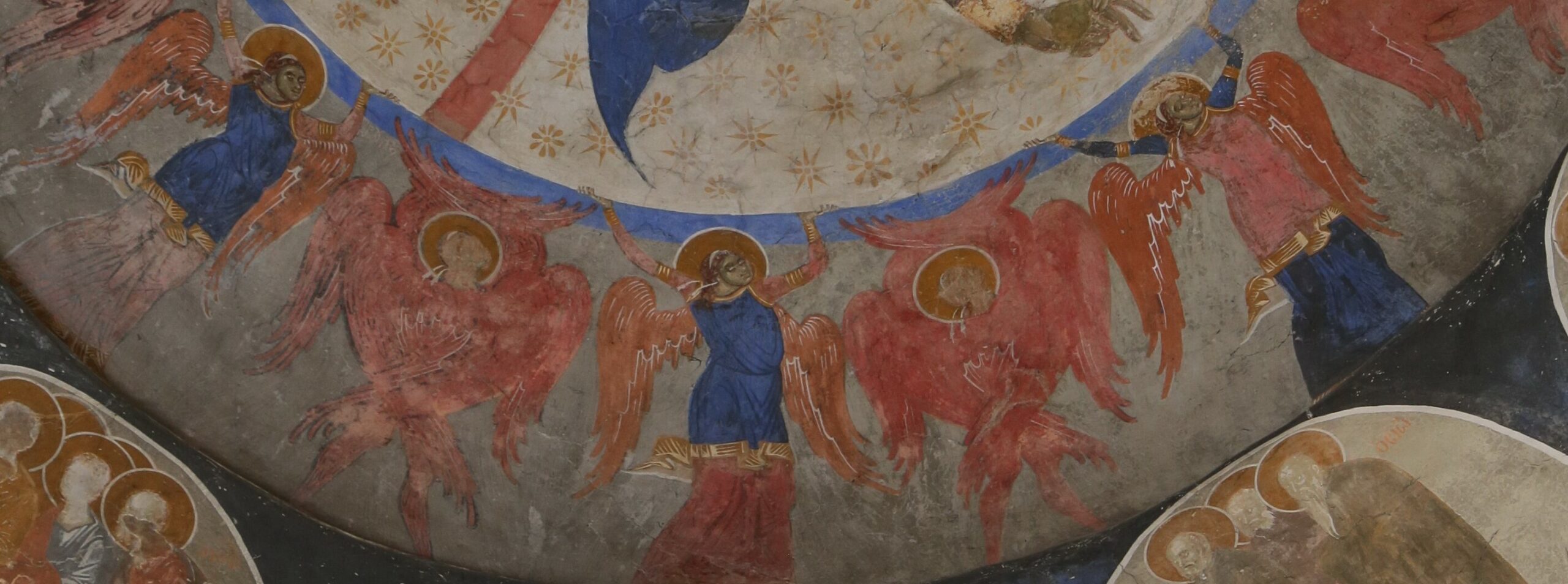
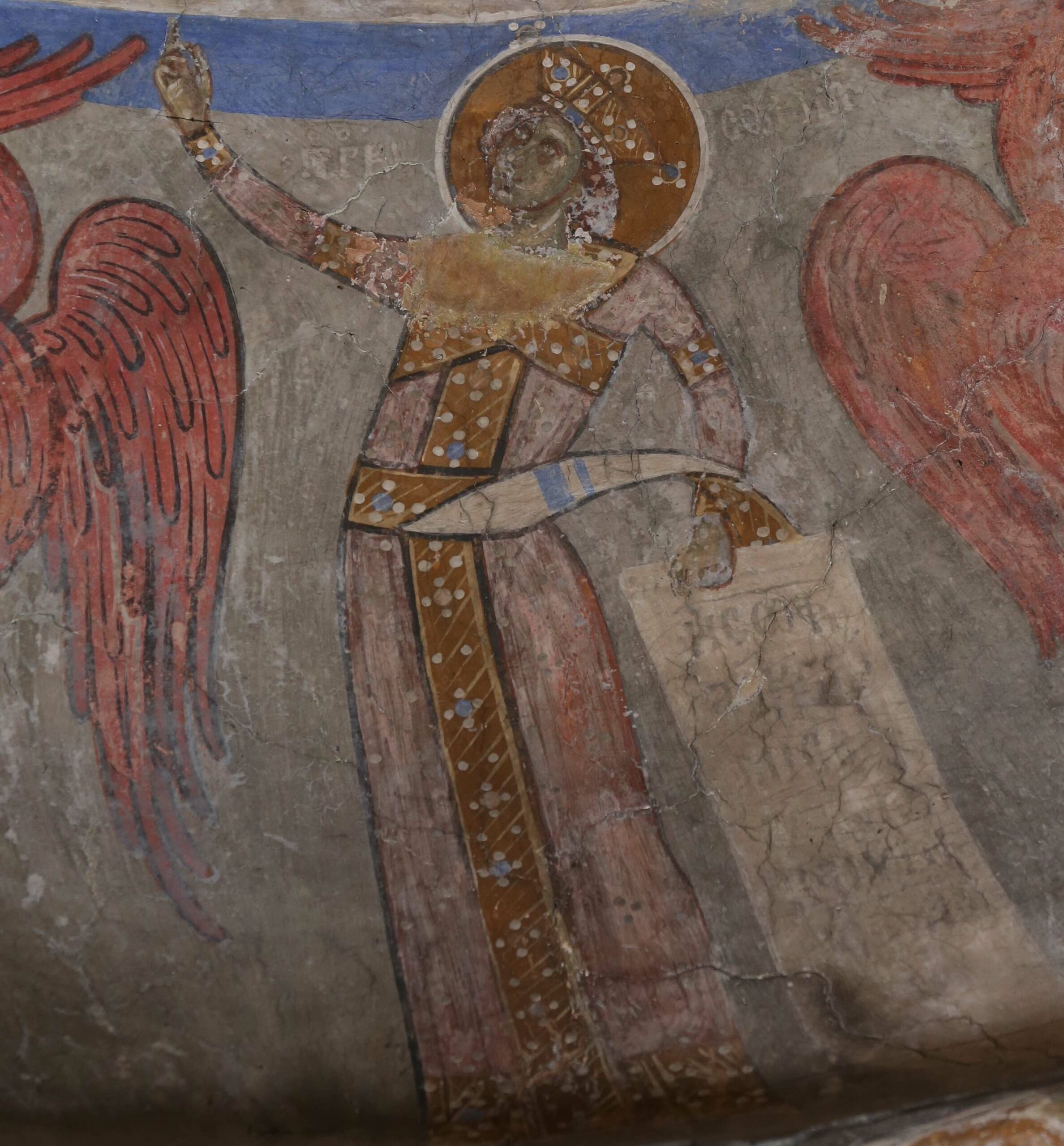
Figures 14 and 15. N. Macedonia, Church of St Demetrios at Markov Manastir near Skopje, Wisdom’s Feast, detail, 1376/1377.

4. The reception of the Byzantine Patristic tradition in medieval Serbia

The Byzantine patristic tradition identified Holy Wisdom with Christ and the Temple of Solomon with the future church founded by the Savior. [36] This dogmatically formulated interpretation emerged quite early on, in a work attributed to St. Anastasios of Sinai (d. 700 CE) and his disciples. This was a detailed explanation of chapter 9 of the Book of Proverbs within a corpus of texts offering various spiritual counsels in the form of questions and answers (έρωταποκρισείς). [37] Under no. 42, in reply to a certain Hippolytus of Rome, the verses on Wisdom are interpreted as a series of Old Testament prefigurations—the seven pillars represent the seven Gifts of the Holy Spirit (Is. 11: 2–3); the sacrifices refer to the prophets who gave their lives for the truth; wine dissolved in a cup (Mother of God) is the divine and earthly nature of Christ; the servants are identified as the apostles sent by Christ to preach their knowledge of the Lord; and the invitation to the Table of Wisdom is extended to those who have yet to feel the power of the Holy Spirit. [38]
This exegetic text reached the Slav lands quite early. It was translated into Bulgarian in the tenth century, but because the miscellany of Simeon I, in which it was included, has not survived, [39] it is known to us through the earliest copy of the Bulgarian original, transcribed in the Russian milieu and known as Izbornik Sviatoslava, 1073 (Gosudarstvennyi Istoricheskii muzei/GIM/State Historical Museum, Moscow, no. 1043). [40] The rich, dominantly Russian manuscript tradition spanning from the eleventh to the eighteenth century suggests that this encyclopedic miscellany enjoyed popularity, [41] and it is believed to have considerably influenced the shaping of the iconography of Holy Wisdom in Russian art of the sixteenth, seventeenth, and eighteenth centuries. [42] It should be noted that the earliest transcriptions of the Izbornik include manuscripts in the Serbian redaction—Hilandar (no. 24, thirteenth century) [43] and Bucharest (Romanian Academy of Sciences, mss. slav. nos. 72 and 310, late thirteenth–early fourteenth century). [44]
Under the aegis of the Athonite manuscript tradition, the work of Dionysios the Areopagite (late fifth–sixth century), which regained popularity in the theological dispute between Gregory Palamas and Barlaam (fourteenth century), was also translated into Serbian. [45] The writings of Dionysios the Areopagite translated by inok Isaiah were widely read in the medieval period and later, as evidenced by over seventy copies in the Serbian, Bulgarian, and Russian recension. [46] Research of the Russian manuscripts, the most numerous among them, [47] reveals the unique status of the Serbian translation by inok Isaiah from 1370/1371 (National Library of Russia, Saint Petersburg, Gilferding Coll., no. 46), believed to be the protograph of all later copies. [48] Important for our topic is the fact that this earliest translation contains commentaries on Proverbs 9 in the so-called Epistle to Titos, Bishop of Crete (fol. 318–328). [49] As the corresponding replies of Anastasios the Sinaite, the commentaries are exegetic in nature, clarifying the Eucharistic meaning of the Old Testament verses. This is apparent already in the title, which seeks to answer the question “what is the house of wisdom, what the bowl, and what are its meats and drinks?ˮ According to this letter, the bowl is a Eucharistic symbol, and its spherical shape and openness symbolize Divine Providence, which is omnipresent and “without beginning and without end.ˮ [50]
To the same spiritual and intellectual milieu belonged Philotheos Kokkinos, an Athonite monk and twice Patriarch of Constantinople (1353–54/5, 1364–76). The views of this influential liturgist, who devoted as many as three sermons (logoi) to Proverbs 9:1—Wisdom has built her house—carried great weight in the theology of the second half of the fourteenth century. [51] These three sermons, presumably written sometime between 1350 and 1360, were contained in a letter to a certain Ignatios whom Philotheos addresses in the prologue as συνεπίσκοπος. [52] Therein Holy Wisdom, as a central dogmatic question, refers to the Son—the second person of the Holy Trinity, [53] while “the house on seven pillars” is interpreted as the Body of Christ in which God dwells and as a metaphor for the Virgin as the “temple of Holy Wisdom.” [54] Although they were never translated into Serbian, Philotheos’s texts reveal the state of patristic thought, which had the strongest influence on the iconography of Wisdom in Palaiologan art. [55] Referring to God the Logos as hypostatic Wisdom, as it was done in the inscription at Markov Manastir (ἡ ἐνυπόστατος τοῦ Θεοῦ λόγου Σοφία), confirms the doctrine of the Wisdom as divine will and the energy of the inseparable Trinity attributed to the Logos incarnate, through whom the trihypostatic God expressed his will. [56]
Interest for the theme of Wisdom did not wane in the fifteenth century. A surviving inscription reports that, in 1413, inok Gavrilo translated the book of Solomon the Wise for the needs of the Hilandar Monastery. [57] These examples call to mind the long-proposed views about the period of Serbian rule on Mount Athos (1345–1371) as a time when Serbian translation, scribing, and editorial work flourished. [58] Spiritual and cultural ties with Mount Athos were always reflected in Serbian art and were even more likely to be felt at the time when the monastic center was part of the principality of Serres ruled by Uglješa Mrnjavčević (1363/1364–1371), the future King Marko’s uncle. Therefore, it is to be expected that these theological and liturgical trends continued to be felt later, during Marko’s reign.

5. Book of Proverbs (9:1–6) and Byzantine hymnography

But the importance attached to Solomon’s verses on wisdom (9:1–6) in the painting of the Palaiologan period can best be understood, we believe, through their role in the liturgy. [59] A long time ago, Lazar Mirković proposed an interpretation of the image in the blind dome of Markov Manastir in light of the hymnography of the liturgical rites for Holy Thursday, which celebrates the institution of the Holy Eucharist. [60] The relevance of the abovementioned liturgical-hymnographic sources was later highlighted by other authors in their interpretations of frescoes with the Wisdom theme. [61] An attempt at a closer reading of the painting in the blind dome of the naos at Rila could be made along the same lines.

Kosmas of Maiuma’s Canon for Holy Thursday, chanted at that day’s liturgy, contains clear references to Proverbs 9 aimed at giving visual form to the meaning of the Last Supper. The first troparion of the first ode of the canon already paraphrases the opening verses of Proverbs 9:

Cause of all and Bestower of life, the infinite Wisdom of God has built His house, from a pure Mother who has not known man. For, clothing Himself in a bodily temple, Christ our God is greatly glorified.

The second troparion of the first ode reads:

Instructing His friends in the Mysteries, the true Wisdom of God prepares a table that gives food to the soul, and He mingles for the faithful the cup of the wine of life eternal,

while Kosmas’s verses in the third troparion call:

Ye faithful, let us all give ear to the exalted preaching of the uncreated and consubstantial Wisdom of God, for He cries aloud: O taste and see that I am good! O sing: Christ our God is greatly glorified. [62]
In the first three troparia, the famed hymnographer makes the Old Testament verses more accessible to the medieval mind, emphasizing their Christological meaning and repeating several times that Christ is the Wisdom of God. [63]

The second part of the compositions at Rila and Markov Manastir, showing saints who approach the immortal table, is again based on the Canon for Holy Thursday, more specifically, the irmos of the ninth ode:
Come, ye faithful, let us raise our minds on high and enjoy the Master’s hospitality and the table of immortal life in the upper room; and let us hear the exalted teaching of the Word whom we magnify. [64]

Figures 16–18. N. Macedonia, Church of St Demetrios at Markov Manastir near Skopje, Wisdom’s Feast, details, 1376/1377.

Adopting familiar iconographic patterns, as explained above, painters faithfully showed the ascended Lord on the heavenly throne and the table of immortality approached by saints. The Table of Wisdom, in particular, was seen in a complex web of meanings, since it existed as a separate literary and visual motif in medieval Serbia, and its connotation, besides the Eucharistic sense, could also refer to the spiritual table, i.e. the Gifts of the Holy Spirit. [65] The Eucharistic meaning in which the liturgy mentions Christ as Wisdom and Logos is suggested by another hymnographic text chanted on Easter Sunday: John Damascene’s Paschal Canon (Canon for Easter Day) sung toward the end of Basil’s and Chrysostom’s liturgy. [66] The second troparion of the ninth ode reads:

O Pascha, great Pascha, great and most sacred Pascha, Christ! O Wisdom, O Word of God, and Power of God! Grant us, O Lord, to partake of you yet more clearly in the day which has no evening, of your Kingdom. [67]

This, then, suggests that the theme of Christ the Wisdom was inspired by the verses of Proverbs 9 in their original form and in poetic hymnody. In some cases, more frequently in later ones, this is additionally clarified through representations of the hymnographers Kosmas of Maiuma and John Damascene. [68] This is hardly surprising, in view of the fact that, over the course of its history, especially in the Palaiologan period, Orthodox medieval art drew theological ideas from the liturgy—the Eucharistic rite and those rites connected with the cycle of the church year. [69]

6. Conclusion

Seen as a whole, the rich imagery of the Proverbs (9:1–6), narrative and symbolical-metaphorical, shows that the visual interpretation of the theology embedded in the Byzantine liturgy, became increasingly elaborate in Serbian medieval churches, creating new meaning in each different context.
Taken together with frescoes depicting the Old Testament king and prophet Solomon within the prophetic cycles and Annunciation scenes, a painted inscription (Proverbs 9:1) traditionally make complete the mystery of Christ’s incarnation. However, the novel themes—Wisdom has built her house and the Old Testament allegory about the feast of Holy Wisdom—emerged in the Late Medieval Balkans, especially in Serbia as the bearers of the new, Eucharistic meanings. As implied by the major relevant sources, an important feature of this theme is a strong emphasis on the institution of the Eucharist—the central rite of the earthly Church. Besides the figure of Wisdom, i.e. Christ the Wisdom and the Word of God, this is also implied through the table and chalice, which symbolize the heavenly throne and immortal food. [70] The sophisticated language of iconography—in the case of the most elaborate painting in Markov Manastir—did not even neglect the meaning of the position of the hands of the martyrs and the righteous in the choirs, which mirror their position in representations of Christ’s disciples in Communion of the Apostles scenes.
Underlying the frescoes at Rila and Markov Manastir is also the notion that the Gifts of the Holy Spirit are food from the table of Holy Wisdom, which comes from Christ the Logos and Wisdom, and hence these images exhibited the potential to visualize what these learned monastic communities, well-versed in the theological trends of their time, must have been very familiar with. The monumental frescoes above the naos of the Transfiguration parekklesion on the upper story of the pyrgos at the Rila Monastery and the narthex of Markov Manastir have the capacity to convey a clear message of salvation. As an image heralding the Eucharist as well as the future heavenly community of the faithful united in the Wisdom of God, the theme of Wisdom’s Feast carried a liturgical meaning with distinctive soteriological-eschatological overtones. [71]

Bibliography

Andronikof, C. 1985. Le cycle pascal. Le Sens des Fetes. II. Paris.
Babić, G. 1987. “Sur l’icone de Poganovo et la vasilissa Helene.” In L’ art de Thessalonique et des pays balkaniques et les courants spirituels au XIVe siecle, ed. D. Davidov and R. Samardžić, 57–65. Belgrade.
Begunov, I͡U. K. 2005. Tvorcheskoe nasledie Grigorii͡a Tsamblaka. Veliko.Turnovo.
Bibikov, M. V. 1996. Vizanti ĭ ski ĭ prototip drevne ĭ she ĭ slavi͡anskoĭ knigi: Izbornik Svi͡atoslava 1073 g. Moscow.
Bogdanović, D. 1982. Inventar ćirilskih rukopisa u Jugoslaviji (XI‒XVII vek). Belgrade.
Bojović, D. 2008. Trpeza Premudrosti. Niš.
Bornert, R. 1966. Les commentaires byzantins de la Divine Liturgie du VIIe au XVe siecle. Paris.
Bri͡usova, V. G. 1977. “Tolkovanie na devetu pritchu Solomona v Izbornike 1073 g.” In Rybakov 1977:292–306.
———. 2006. Sofii͡a Premudrostʹ Bozhii͡a v drevnerussko ĭ literature i iskusstve. Moscow.
Brzozowska, Z. 2015. “Wisdom Has Built Her House (Proverbs 9, 1–6). The History of the Notion in Southern and Eastern Slavic Art in the 14th–16th Centuries.” Studia Ceranea 5:33–58.
Cvetkovski, S. 2013. “Starozavetna teofanija vo freskoživopisot na crkvata Sv. Nikola Čudotvorec vo Ohrid.” Prilozi 44/1–2:57–83.
Davidov Temerinski, A. 1995. “Ciklus Strašnog suda.” In Zidno slikarstvo manastira Dečana, gradja i studije, ed. V. J. Djurić, 191–211. Belgrade.
Dinekov, P., et al., ed. 1991; 1993; 2015. Simeonov sbornik ( po Svetoslavovii͡a prepis ot 1073 g .), Vol. I. Izsledvanii͡a i tekst ( Sofia ); Vol. II. Rechnik indeks ( Sofia ); Vol. III. Grŭt͡ski izvori. Sofia.
Dinić, M. 1966. “Relja Ohmućević – istorija i predanje.” Zbornik radova Vizantološkog instituta 9:95–118.
Djordjević, I. M. 1994. Z idno slikarstvo srpske vlastele. Belgrade.
———. 2006. “Darovi Svetog Duha u proskomidiji Bogorodičine crkve u Morači.” In Manastir Morača, ed. D. Popović and B. Todić, 195–212. Belgrade. Repr. in Djordjević 2008:182–199.
———. 2008. Studije srednjovekovne umetnosti. Belgrade.
Djurić, V. J. 1989. “Les portraits de souverains dans le narthex de Chilandar.” Hilandarski zbornik 7:105–132.
———, ed. 1991. Arhiepiskop Danilo II i njegovo doba. Belgrade.
Enberg, G., ed. 1980–1981. Prophetologium, Pars altera. Lectiones anni immobilis. Copenhagen.
Evseeva, L. M. 1982. “Dve simvolicheskie kompozicii v rospisi XIV v. monastyri͡a Zarzma.” Vizanti ĭ ski ĭ vremennik 43:134–146.
———. 2000. “Pir Premudrosti.” In Sofii͡a Premudrost ʹ Bozhii͡a. V y stavka russko ĭ ikonopisi XIII– XIX vv. iz sobrani ĭ muzeev Rossii, ed. O. A. Chernova, 194–197. Moscow.
Gabelić, S. 1998. Manastir Lesnovo. Belgrade.
Gleede, B. 2012. The Development of the Term ἐνυπόστατος from Origen to John of Damascus. Leiden.
Goltz, H., et al. 2010–2013. Das Corpus des Dionysios Areiopagites in der slavischen Übersetzung von Starec Isaija (14.Jahrhundert) . 5 vols. Freiburg.
Gorskiĭ, A. V., and K. I. Nevostruev. 1859. Opisanie slavi͡anskikh rukopise ĭ Moskovsko ĭ Sinodalʹnoĭ biblioteki. Vol. II/2. Moscow.
Grabar, A. 1928. La peinture religieuse en Bulgarie. Paris.
———. 1961. “Sur les sources des peintres byzantins des XIIIe et XIVe siecles.” Cahiers Archéologiques 12:351–380.
Gravgaard, А. M. 1979. Inscriptions of Old Testament Prophecies in Byzantine Churches. Copenhagen.
Gromova, E. B. 2009. “‘Premudrostʹ sozda sebe dom’ v bogoslovskoĭ i izobrazitelʹnoĭ tradicii XIV v.” In Serbsko-russkie literaturn y e i kul ʹ turn y e svi͡azi XIV–XX vv., ed. L. K. Gavri͡ushina, 6–23. Saint Petersburg.
Hamann-Mac Lean, R., and H. Hallensleben. 1963. Die Monumentalmalerei in Serbien und Makedonien vom 11. bis zum frühen 14. Jahrhundert. Bildband. Giesen.
Hoeg, C., and G. Zuntz, eds. 1970. Prophetologium . Pars prima. Lectiones anni mobilis , Vol. I, Fasc. VI. Copenhagen.
Hristova-Shomova, I. 2016. “Sophia, the Wisdom of God. According to Proverbs 9:1–11 in the Slavic Tradition of Word and Image.” In The Bible in Slavic Tradition, ed. A. Kulik et al., 207–213. Leiden.
Ivanova, K. 1979. “Za Khilendarskii͡a prepis na pŭrvii͡a Simeonov sbornik.” Starobŭlgarska literatura 5:57–96.
Ivanova, K., and A. A. Turilov. 2014. “Izbornik 1037 g.” Pravoslavnai͡a Ėnt͡siklopedii͡a 21:536–539.
James, L. 1991. “Colour and the Byzantine Rainbow.” Byzantine and Modern Greek Studies 15:66–94.
Jevtić, I. 2013. “Narrative Mode in Late Byzantine Painting: Questions it raises about sacred images.” In Actual Problems of Theory and History of Art vol. 3, ed. S. V. Maltseva and E. Yu. Sanyukovich-Denisova, 195–199. Saint Petersburg.
———. 2019. “Art in decline or art in the age of decline? New approaches to Late Byzantine painting Historiography and new approaches to Late Byzantine painting.” In Late Byzantium reconsidered. The arts of the Palaiologan era in the Mediterranean, ed. A. Mattiello and M. Alessia Rossi, 31–52. London.
Korać, D. 1992. “Sveta Gora pod srpskom vlašću 1345‒1371.” Zbornik radova Vizantološkog instituta 31:9–199.
Kuev, K. 1991. “Poi͡ava i razprostranenie na Simeonovii͡a sbornik.” In Dinekov et al. 1991:34–98.
Kuev, K. M. 1977. “Arkheograficheskie nabli͡udenii͡a nad Sbornikom Simeona v staroslavi͡anskikh literaturakh.” In Rybakov 1977:50–56.
Lafontaine-Dosogne, J. 1968. “Theophanies-visions auxquelles participent les prophetes dans l’art byzantin apres la restauration des images.” In Synthronon: Art et archéologie de la fin de l’antiquité et du moyen âge, ed. A. Grabar, 135–143. Paris.
Louth, A. 2004. St. John Damascene: Tradition and Originality in Byzantine Theology. Oxford.
———. 2009. “The Reception of Dionysius in the Byzantine World: Maximus to Palama.” In Re-thinking Dionysius the Areopagite, ed. S. Caokley and C. M. Stang, 55–69. Oxford.
Marković, I. 2020. “Geneza ikonografije Premudrosti u spomenicima graditeljske epohe Nemanjića iz prve polovine XIV veka.” In Juhorska čtenija—zvezde nad Juhorom, ed. D. Atanasov et al., 111–128. Svojnovo and Kruševac.
Mercenier, E. 1953. La priere des Eglises de rite byzantine, II. Les Fetes, I. Grandes Fetes fixes. Monastere de Chevetogne. Repr. 1962.
Meyendorff, J. 1957. “L’iconographie de la Sagesse Divine dans la tradition byzantine.” Cahiers Archéologiques 10:259–277.
———. 1959. Introduction a l’etude de Gregoire Palamas. Paris.
———. 1987. “Wisdom-Sophia: Contrasting Approaches to a Complex Theme.” Dumbarton Oaks Papers 41:391–401.
Migne, J.-P. ed. 1857–1866. Patrologiae cursus completus. Series graeca. 161 vols. Paris.
Mihaila, G. 1987. “Spiski Sbornika t͡sari͡a Simeona v biblioteke Rumynskoĭ akademii.” Palaeobulgarica 11/3:3–20.
Milanović, V. 1991. “‘Proroci su te nagovestili’ u Peći.” In Djurić 1991:409–424.
———. 1995. “Starozavetne teme i Loza Jesejeva.” In Zidno slikarstvo manastira Dečana. Gradja i studije, ed. V. J. Djurić, 213–240. Belgrade.
Miljković, B. 2004. “L’illustration de la Deuxieme homelie pascale de Gregoire le Theologien.” Zbornik radova Vizantološkog instituta 41:104–111.
Miljkoviќ-Pepek, P. 1967. Deloto na zografite Mihailo i Eutihij. Skopje.
Millet, G. 1945. La dalmatique du Vatican. Les Elus images et croyances. Paris.
Mirković, L. 1961. “Da li se freske u Markovom manastiru mogu tumačiti žitijem sv. Vasilija Novog.” Starinar 12:77–88.
Mirković, L., and Ž. Tatić. 1925. Markov manastir. Novi Sad.
Morozov, T. S., ed. 1880. Izbornik ʺ velikago kni͡azi͡a Svi͡atoslava I͡aroslavicha 1073 goda. Saint Petersburg.
Mošin, V. A. 1958. “K datirovke rukopiseĭ iz sobranii͡a A. F. Gilʹferdinga Gosudarstvennoĭ Publichnoĭ biblioteki.” Trudy Otdela drevnerussko ĭ literatury 15:409–417.
Mother Mary and archimandrite Kallistos Ware. 2002. The Lenten Triodion. South Canaan, PA.
Munitiz, J. A. 2011. Anastasios of Sinai Questions and Answers . Turnhout.
Nersessian, S. Der. 1963. “Notes sur quelques images se rattachant au theme du Christ-ange.” Cahiers Archéologiques 13:209–215.
———. 1975. “Program and Iconography of the Frescoes of the Parecclesion.” In The Kariye Djami , IV, Studies in the Art of the Kariye Djami and Its Intellectual Background, ed. P. A. Underwood, 305–349. Princeton.
Panayotova, D. 1974. “Le Christ Verbe, Sagesse et Lumière sur les fresques de la Tour de Chrelju au monastère de Rila.” In Actes du XIV Congrès international des études byzantines . Vol. III, ed. M. Berza and E. Stǎnescu, 405–410. Bucharest.
Παπαμαστοράκης, Τ. [Papamastorakes, T.] 2001. Ο διάκοσμος του τρούλου των ναών της παλαιολόγειας περιόδου στη Βαλκανική χερσόνησο και την Κύπρο [O diakosmos tou troulou tôn vaôn tês palaiologeias periodou stê Balkanikê chersonêso kai tên Kupro]. Athens.
Papastavrou, H. 2007. Recherche iconographique dans l’art byzantin et occidental du XIe au XVe siecle: l’Annonciation. Venice.
Pentcheva, B. 2000. “Imagined Images: Visions of Salvation and Intercession in a Double-Sided Icon from Poganovo.” Dumbarton Oaks Papers 54:139–153.
Petković, S. 1986. Morača. Belgrade.
Petković, V. R. 1929. “Freske sa predstavom Premudrosti.” In Zbornik u čast Bogdana Popovića. Belgrade.
Petković, V. R., and Dj. Bošković. 1941. Manastir Dečani. 2 vols. Belgrade.
Piguet-Panayotova, D. 1979. “La chapelle dans le tour de Khrelju au monastère de Rila.” Byzantion 49:363‒384.
———. 1987. Recherches sur la peinture en Bulgarie du bas moyen age. Paris.
Popović, Lj. 1991. “Figure proroka u kupoli Bogorodice Odigitrije u Peći.” In Djurić 1991:443–469.
Prashkov, L. 1975. “Khreleva bashni͡a Rilʹskogo monastyri͡a i ee stenopisʹ.” In Drevnerusskoe iskusstvo. Zarubezhnye svi͡azi, ed. G. V. Popov, 147–171. Moscow.
———. 1973. Khrel ʹ ovata kula. Sofia.
Prokhorov, G. M. 1985. “Poslanie Titu-ierarkhu Dionisii͡a Areopagita v slavi͡anskom perevode i ikonografii͡a ‘Premudrostʹ sozda sebe dom’.” Trudy Otdela drevnerussko ĭ literatury 38:7–41.
Ψευτογκάς, Β. Σ. [Pseutogkas, B. S.], ed. 1979. Φιλοθέου Κοκκίνου Πατριάρχου Κωνσταντινουπόλεως ἔργα [Filotheou Kokkinou Patriarchou Kônstantinoupoleôs erga]. Vol. 3, Λ όγοι και ομιλίες [Logoi kai omilies]. Thessaloniki.
Radojčić, S. 1956. “Freske Markovog manastira i Život sv. Vasilija Novog.” Zbornik radova Vizantološkog instituta 4:215–227.
———. 1975. “La table de la Sagesse dans la literature et l’art serbes.” Zbornik radova Vizantološkog instituta 16:215–224.
———. 1982. “O Trpezi Premudrosti u srpskoj književnosti i umetnosti od ranog XIII do ranog XIX v.” In Odabrani članci i studije 1933–1978, 223–229. Belgrade.
Radovanović, J. 1988. “Ikonografija fresaka protezisa crkve Sv. Apostola u Peći.” In Ikonografska istraživanja srpskog slikarstva XIII i XIV veka, ed. J. Radovanović, R. Samardžić, D. Anotijević, D. Davidov, and D. Dragojlović, 1–23. Belgrade.
Rahlfs, A. 1915. Die Alttestamentlichen Lektionen der griechischen Kirche. Berlin.
———, ed. 1935. Septuaginta II. Stuttgard.
Rajić, D., and M. Timotijević. 2012. Manas tiri Ovčarsko-Kablarske klisure. Čačak.
Richard, M. 1967–1968. “Les veritables ‘questions et reponses’ d’Anastase le Sinaite.” Bulletin del’Institut de Recherche et d’Histoire des Textes 15:39–56.
———. 1973. “Le Commentaire de saint Jean Chrysostome sur les Proverbes de Salomon.” Analekta Blatadon18: 99–103.
Richard, M., and J. Munitiz. 2006. Anastasii Sinaitae: Quaestiones et responsiones. Turnhout.
Rybakov, B. A., ed. 1977. Izbornik Svi͡atoslava 1073 g. Moscow.
Ševčenko, N. P. 2008. “Art and liturgy in the later Byzantine Empire.” In The Cambridge History of Christianity. Vol. 5. Eastern Christianity, ed. M. Angold, 127–154. Cambridge.
Sidorova, T. A. 1971. “Volotovskai͡a freska ‘Premudrostʹ sozda sebe dom’ i ee otnoshenie k novgorodskoĭ eresi strigolʹnikov v XIV v.” Trudy Otdela drevnerussko ĭ literatury 26:212–231.
Sindik, N. R., ed. 2011. Opis ćirilskih rukopisnih knjiga manastira Visoki Dečani. Opis južnoslovenskih ćirilskih rukopisa 4. Belgrade.
Spatharakis, I. 1999. Byzantine Wall Paintings of Crete , I. Rethymnon province . London.
———. 2010. Byzantine Wall Paintings of Crete , II. Mylopotamos Province. Leiden.
Spatharakis, I., and T. van Essenberg. 2012. Byzantine Wall Paintings of Crete , III. Amari province . Leiden.
Stanchev, K. 1981. “Areopagitskii͡at korpus v prevoda na Isaĭi͡a Serski. Arheograficheski belezhki.” Arheografski prilozi 3:145–152.
Ştefănescu, J. D. 1936. L’Illustration des liturgies dans l’art de Byzance et de l’Orient. Brussels.
Stojanović, Lj. 1902–1926. Stari srpski zapisi i natpisi. Vol. I–VI. Belgrade.
Subotić, G. 1993. “Ikona vasilise Jelene i osnivači manastira Poganova.” Saop š tenja 25:25–40.
Θανάσου, Γ. Μ. [Thanasou, G. M.] 2016. Η ακολουθία των Εγκαινίων. Ιστορικολειτουργική θεώρηση και έντυπες εκδόσεις [Ê akolouthia tôn Egkainiôn. Istorikoleitourgikê theôrêsê kai entupes ekdoseis]. Master’s thesis, The National and Kapodistrian University of Athens.
Todić, B. 1988. Gračanica. Slikarstvo. Belgrade.
———. 1999. Serbian Medieval Painting . The Age of King Milutin. Belgrade.
Todić, B., and M. Čanak-Medić. 2005. Manastir Dečani. Belgrade.
Tomić Djurić, M. 2019. Freske Markovog manastira. Belgrade.
Trapp E., R. Walther, and H.-V. Beyer, eds. 1976–1996. Prosopographisches Lexikon der Palaiologenzeit. 12 vols. Vienna.
Τρεμπέλας, Π. [Trebelas, P.] 1952. “Τάξις καὶ ἀκολουθία τῶν ἐγκαινίων [Taxis kai akolouthia tôn egkainôn]” Θεολογία [Theologia]23:218–219.
Trifunovi
, Dj. 1981.“Zbornici sa delima Pseudo-Dionisija Aeropagita u prevodu inoka Isaije.” Cyrillomethodianum 5:166–171.
———. 2008. “Areopagitova simvolika čovečjeg tela u prevodu inoka Isaije.” Zbornik radova Vizantološkog instituta 45:243–251.
———. 2013. “O nekim pitanjima proučavanja Poučenija izabranih u starim slovenskim književnostima.” Prilozi za književn ost, jezik, istoriju i folklor 79:3–18.
Tsamagda, V. 2012. Die Panagia-kirche und die Erzengelkirche in Kakodiki. Werkstattgruppen, kunst- und kulturhistoriche analyse byzantinischer wandmalerei des 14. Jhs. auf Kreta . Vienna.
Turilov, A. A. 1997. “Novyĭ spisok Izbornika Simeona-Svi͡atoslava: K atribut͡sii atribut͡sii dvuh fragmentov v sbornike pergamennyh otryvkov CNB AN Litvy.” Palaeobulgarica 21/2:5–11.
Velmans, T. 2001. “Deux images de la Sagesse divine en Moldavie (Roumanie).” Δελτίον της Χριστιανικής Αρχαιολογικής Εταιρείας 22:385‒392.
Vincenzo, R. 1988. “Consacrazione e dedicazione di chiesa, secondo il ‘Barberianus graecus 336’.” Orientalia christiana periodica 54:79–118.
Vidoeska, B., ed. 2012. Markov manas tir, Sveti Dimitrija. Crteži na freski. Skopje.
Vojvodić, D. 2005. Zidno slikarstvo crkve svetog Ahilija u Arilju. Belgrade.
Vrooland, J., and W. R. Veder. 2006. “O rukopisnoĭ tradicii Simeonova sbornika.” Polata knigopisnaja 35:68–80.
Wellesz, E. 1961. A History of Byzantine Music and Hymnography. Oxford.
Willson, J. L. 2020. “The Allegory of Wisdom in Chrelja’s Tower seen through Philotheos Kokkinos.” In Byzantium in Eastern European Visual Culture in the Late Middle Ages, ed. M. A. Rossi and A. I. Sullivan, 19–35. Leiden and Boston.
Ευχολ ό γιον Δ’ – Ε γκαινιαστικόν. 2003. The Holy Monastery of Simonopetra.

Footnotes

[ back ] 1. Rahlfs 1915:[46],140; [50],144; [51]; [58],152; Enberg 1980–1981:L49c,14, L63c,14,88,145; Gravgaard 1979:83(170); Mercenier 1953 (1962):I, 82, 349, 419. For the examples of Serbian prophetologia that confirm the liturgical use of these verses on Marian feast days, see Milanović 1991:410n12.
[ back ] 2. The quote is also a part of the paroimias read on Sunday that commemorate the restoration of the Church of the Holy Sepulcher in Jerusalem, on the Tuesday of the third week of Great Lent, and on Holy Tuesday; see Hoeg and Zuntz 1970:529, L 42c; Rahlfs 1915:[44], 138, [46], 140, [49], 143, [64], 158; Gravgaard 1979:83; Enberg 1980–1981:20.
[ back ] 3. For the rite of the consecration of a church, see Τρεμπέλας 1952:218–219; Meyendorff 1957:261n3; Meyendorff 1987:392; Θανασου 2016.
[ back ] 4. See Serbian euchologion Dečani no. 69, 1390–1400, fol. 194v–211r. Sindik 2011:249; Bogdanović 1982:no. 1563, 108. Around the same time, inok Gregory Tsamblak is mentioned as the scribe of the manuscript with the Service of the Consecration of a Church, which has survived in a seventeenth-century copy (CGIA mold. SSR, no. 11, fol. 75), see Begunov 2005:452. I am indebted to Justin Wilson for calling my attention to this liturgical source. For Greek euchologia, see Vincenzo 1988:79–118; Ευχολ ό γιον Δ’ – Εγκαινιαστικόν 2003; Θανάσου 2016.
[ back ] 5. For the list of churches where Solomon appears with this quote, see Gravgaard 1979:83; Popović 1991:448; Παπαμαστοράκης 2001:191.
[ back ] 6. Vojvodić 2005: 48–49n223.
[ back ] 7. Papastavrou: 2007:84–86.
[ back ] 8. For the selection of examples in Byzantine and Serbian monumental painting, see Vojvodić 2005:48–49n223, 225, 226, 231 (with sources and literature).
[ back ] 9. Ševčenko 2008:127–130.
[ back ] 10. Petković 1929:317–321; Ştefănescu 1936:139–142; Grabar 1961:372–380; Radojčić 1975:215–224; Radojčić 1982:223–229; Evseeva 2000:194–197; Gromova 2009:6–23; Brzozowska 2015:33–58; Marković 2020:111–128.
[ back ] 11. Petković 1929:318, fig. 1; Meyendorff 1957:270; Hamann-Mac Lean and Hallensleben 1963:Pl. 20.
[ back ] 12. Todić 1988:144–145, color pl. IV.
[ back ] 13. Djurić 1989:113–114, fig. 2; Todić 1999:60, 83, 105, 153, 165, 198, 353–354.
[ back ] 14. Petković and Bošković 1941. Vol. II:50, 67–68, pl. CCLXVI; Milanović 1995:213–215.
[ back ] 15. Sidorova 1971:212–231.
[ back ] 16. Evseeva 1982:134–146; Milanović 1995:213–215, fig. 1, 2.
[ back ] 17. On the narrative expression in Late Byzantine painting, see Jevtić 2013:195–199.
[ back ] 18. Milanović 1995:213–215, fig. 1, 2.
[ back ] 19. Prashkov 1975:147–171; Prashkov 1973:21–33; Panayotova 1974:405–410; Piguet-Panayotova 1987:281–293, fig. 136–141; Djordjević 2008:137, 100–102; Willson 2020:19–35.
[ back ] 20. Mirković and Tatić 1925:72; Radojčić 1956:220–225; Mirković 1961:83–88; Tomić Djurić 2019:363–377. For a drawing of the fresco, see Vidoeska 2012:34, 35, 37, 41.
[ back ] 21. On protosebastos Hrelja, see Dinić 1966:95–99.
[ back ] 22. Prashkov 1973:30; Djordjević 1994:137. For a different identification of the personifications of the Gifts of the Holy Spirit, see Panayotova 1974:409.
[ back ] 23. Tomić Djurić 2019.
[ back ] 24. For the new identifications and the inscriptions, see Tomić Djurić 2019:363–377, 544–545, fig. 177–180 (with older bibliography).
[ back ] 25. On the creativity in Late Byzantine monumental painting, based on the combination of retrospective and innovative elements, see Jevtić 2019:39.
[ back ] 26. On the Last Judgment, see Millet 1945:73–99; Todić 1988:159–164; Petković and Bošković 1941. vol II:53–55, 69, T. CCLIX/2, CCLXXII/1, CCLXXIV, CCLXXV/1–CCLXXX/1; Davidov Temerinski 1995:191–211; Todić and Čanak-Medić 2005:448–453; Nersessian 1975:325–331, pl. 368–407. For the rainbow motif and its meaning in these images, see James 1991:66–94.
[ back ] 27. Grabar 1961:372–380, esp. 379. For representations of Old Testament theophanies, see Lafontaine-Dosogne 1968:135–143; Cvetkovski 2013:57–83. See also images of prophetic visions of God in churches in the Balkans: Peribleptos of Ohrid—Christ the Angel of the Great Council (see Nersessian 1963:209–215; Miljkoviќ-Pepek 1967:50, 81–82; Miljković 2004:104–111), St. Nicholas in Prizren (see Djordjević 1994:134), Lesnovo—the vision of Prophet Ezekiel of the closed gate (see Gabelić 1998:174, 175, 178, T. XLVIII). Cf. the icon from Poganovo—the vision of Prophet Ezekiel with Christ Emmanuel (see Babić 1987:57–65; Subotić 1993:25–40; Pentcheva 2000:139–153).
[ back ] 28. For the homily, see PG 49, cols. 408–418. On the representations of choirs of the righteous, see Millet 1945:82–90; Grabar 1928:85; Todić 1988:161. Painting choirs of the righteous is characteristic for the Cretan iconographic tradition of the Last Judgment in the Post-Byzantine period, see Spatharakis 1999:49, 115, 123, 181, 227, fig. 45, 155, 160, 257, 258, 258; Spatharakis 2010:99, 101, 113, 171, 173, 214, 217, 231, fig. 464, 465, 468, 255, 256, 257, 321, 322, 358, 359, 360; Spatharakis and Essenberg 2012:39; Tsamagda 2012:198–200, Abb. 207, 208.
[ back ] 29. On this aspect of the narrative mode, see Jevtić 2013: 197–198.
[ back ] 30. Petković 1986:71–75, fig. 24–26, draw. 256–258; Djordjević 2006:182–198, fig. 47.
[ back ] 31. Djordjević 2006:184; Rajić and Timotijević 2012:206, fig. 181.
[ back ] 32. Rahlfs 1935:582; Hoeg and Zuntz 1970:41. For the selection of examples of Serbian medieval prophetologia, see Djordjević 2006:189–190.
[ back ] 33. PG 44, col. 679; Richard 1973:99–103. See also Djordjević 2006:184.
[ back ] 34. Two of these concepts were merged into one—the Spirit of Piety and the Spirit of the Fear of the Lord. For more details, see Djordjević 2006:189–190.
[ back ] 35. Besides Isaiah, three more prophets surround the Table of Wisdom: Joel, Ezekiel, and Zechariah, each holding a scroll with a quote from his prophecy—Joel (2:12–13), Ezekiel (2: 9–10), Zechariah (unidentified). See Djordjević 2006:187–188.
[ back ] 36. On Holy Wisdom in the earliest patristic texts, see Meyendorff 1957:260. See also Richard 1973:99–103; Hristova-Shomova 2016:207–213.
[ back ] 37. PG 89, 311–824; Richard 1967–1968:39–56. For a more recent edition of the Greek text, see Richard and Munitiz 2006. For the English translation, see Munitiz 2011.
[ back ] 38. PG 89, 593. For the French translation, see Meyendorff 1957:260–261.
[ back ] 39. See Dinekov, P., et al. 1991; 1993; 2015.
[ back ] 40. It was written for Sviatoslav II Yaroslavich (1027–1076), Grand Prince of Kiev, son of Yaroslav the Wise. See Morozov 1880. For the relationship between the Slavic text and its Greek prototypes, see Bibikov 1996.
[ back ] 41. See the contributions in the edited volume Rybakov 1977. See also Kuev 1991:34–98; Turilov 1997:5–11; Vrooland and Veder 2006:68–80. An extensive bibliography on the subject is provided in Ivanova and Turilov 2014:536–539.
[ back ] 42. Bri͡usova 1977:292–307; Bri͡usova 2006.
[ back ] 43. Gorskiĭ and Nevostruev 1859:365–405, No. 161/31; Kuev 1977:51, 52; Bogdanović 1982:150; Kuev 1991:39–41. For more details about the text, see Ivanova 1979:57–96.
[ back ] 44. No. 310 is a copy of MS no. 72, see Kuev 1977:52; Kuev 1991:41–43. For more details about the manuscript, see Mihaila 1987:3–20, esp. 13.
[ back ] 45. Meyendorff 1959:280–285; Louth 2009:55–69.
[ back ] 46. Trifunović 1981:166–171. For a more recent edition of the Corpus Areopagiticum in the translation of monk Isaiah from 1371, see Goltz, H. et al. 2010–2013.
[ back ] 47. Stanchev 1981:145–152.
[ back ] 48. Mošin 1958:409–417. See also Trifunović 2008:244, 245.
[ back ] 49. The letter to Titos the Hierarch was published by Prokhorov 1985:7–41, who sees a chronological link between the appearance of the Wisdom has built her house theme in monumental painting and the interests of the intellectual milieu for the writings of Pseudo-Dionysios the Areopagite and believes that this text must have contributed to the development of the Wisdom iconography.
[ back ] 50. Prokhorov 1985:33–35.
[ back ] 51. Ψευτογκάς 1979:65–86 (first sermon), 87–122 (second sermon), 123–147 (third sermon). A direct link between Philotheos’s texts and the development of the iconography has been suggested by Meyendorff 1987:392–393.
[ back ] 52. Trapp E., et al. 1976–1996:Fasc. 3, 97, no. 8013. For the dating, see Evseeva 1982:138n22.
[ back ] 53. Ψευτογκάς 1979:129, line 165–195, 132, line 250.
[ back ] 54. Ψευτογκάς 1979:130, line 196–199; 134, line 295–301, 135, line 345; 138.
[ back ] 55. For the discussion about the wider relevance of Kokkinos’s discourse for understanding the concept of visualization of the allegory of Wisdom in Rila, see Willson 2020:24–32.
[ back ] 56. For the use of the term ἐνυπόστατος in patristic texts and the meaning assigned to it, see Gleede 2012.
[ back ] 57. Stojanović 1902–1926:I, 69–70, No. 220; see also Trifunović 2013:n16.
[ back ] 58. Korać 1992:178, 179. See also Trifunović 2013:6.
[ back ] 59. See Meyendorff 1987:393.
[ back ] 60. Mirković 1961:83–88. On the canon by Kosmas of Maiuma and the liturgy of Holy Thursday, see Andronikof 1985:151. For the view that the fresco in Markov Manastir was inspired by a mystical text—the Vita of St. Basil the Younger, see Radojčić 1956:220–225.
[ back ] 61. Panayotova 1974:408–409; Piguet-Panayotova 1987:285; Evseeva 1982:138; Velmans 2001:386; Bri͡usova 2006:17–18; Brzozowska 2015:44–45.
[ back ] 62. Mirković 1961:87–88. For the English translation of the Canon for Holy Thursday, see Mother Mary and archimandrite Kallistos Ware 2002:549.
[ back ] 63. Mirković 1961:87.
[ back ] 64. Mirković 1961:87; Mother Mary and archimandrite Kallistos Ware 2002:553.
[ back ] 65. Radojčić 1975:215–224; Bojović 2008. See also Djordjević 2006:182–198.
[ back ] 66. For John Damascene’s Canon on Easter Day, see Louth 2004:267–268. The final troparion John Damascene draws from the conclusion of Gregory’s second Easter homily: “But, O Pascha, great and sacred and cleansing the whole cosmos—for I will speak to you as to a living person! O Word of God, and Light and Life and Wisdom and Power! I rejoice in all your names.” (PG 36. 664A). See Louth 2004:268.
[ back ] 67. Mirković 1961:88. Cited after Wellesz 1961:213–214.
[ back ] 68. For Volotovo, see Meyendorff 1957:274; Sidorova 1971:213, 220; Bri͡usova 1977:300; Bri͡usova 2006:76–79, 91; Brzozowska 2015:47. For other examples in Russian art, see Brzozowska 2015:49, 51, 52. The two hymnographers are shown as standing figures on the north wall of Hrelja’s Tower; it should, however, be noted that there is no direct programmatic link between their representations with the image of Wisdom’s Feast. See Piguet-Panayotova 1979:373, pl. II.
[ back ] 69. See Ševčenko 2008:127–153.
[ back ] 70. Ştefănescu 1936:105, 112, 114; Bornert 1966:49, 54, 72, 227, 228.
[ back ] 71. See the second troparion of the first ode in Kosmas of Maiuma’s Canon for Holy Thursday (see Mirković 1961:88. Cited after Wellesz 1961:213–214).