
Performance and Subjectivity in an Illustrated Psalter: Vatican gr. 1927

  Trahoulia, Nicolette S. 2025. “Performance and Subjectivity in an Illustrated Psalter: Vatican gr. 1927.” In “Performance and Performativity in Late Antiquity and Byzantium,” ed. Niki Tsironi, special issue, Classics@ 24. https://nrs.harvard.edu/URN-3:HLNC.ESSAY:104135619.


It goes without saying that the Byzantine psalter constituted a text for performance.* The reciting of psalms was part of the daily routine of monastic life, as well as an important part of private lay devotion. [1] My interest in this paper is in how the performative nature of the text can manifest in psalter illustrations. To this end, I will focus on the Vatican psalter gr. 1927, a particularly intriguing manuscript because of the ways in which its miniatures consistently present David, the author of the psalms, as a performative figure. [2] Like other psalters of the eleventh and twelfth centuries, Vatican gr. 1927 contains numerous illustrations of David in prayer, either prostrate or standing, foregrounding the function of the psalter, first and foremost, as a book of prayer. [3] However, a notable feature of Vatican gr. 1927 that sets it apart from most other illustrated psalters is that almost every illustration includes David. [4] And unlike other illustrated psalters in which David takes part in the action of narrative scenes or simply prays, in Vat. gr. 1927 the Old Testament king often stands apart from the narrative action, indicating by gesture the scenes around him. This paper will examine Vatican gr. 1927’s self-reflexive presentation of David as the author of the psalms who acts as a performative guide, mediating between the text and the viewer/reader, and attempt to contextualize this singular performativity.

The Vatican psalter gr. 1927 has received little attention since 1941 when Ernst De Wald published the manuscript’s miniatures. The manuscript was definitely intended to be an impressive production, with miniatures painted on gold ground, and an emphasis on blue, red, and purple pigments. It is heavily illustrated with 145 miniatures, and originally must have had more if we take into account that a number of folios are missing. The manuscript measures 245 by 185 mm, large enough for folios to comfortably accommodate both text and illustration, but also quite portable. Lacking a colophon, the manuscript can be dated on the basis of the style of the miniatures to the late eleventh or early twelfth century. [5] Illustrations are, as a rule, placed at the head of each psalm, within the text column. One defining feature of this manuscript is the extensive use of excerpts from the psalter text written either within the illustration or alongside it in the margin. This proximity of word to image means the experience of viewing the images is closely aligned with the reading or recitation of the psalter text. I would also suggest it indicates an especially scholarly environment for production. Rather than reproducing a substantial portion of the psalter text, as is the case in Vatican gr. 1927, miniatures in other illustrated psalters tend to include short inscriptions that simply label figures or events. [6] Whether Vatican gr. 1927 was intended for monastic or lay use remains open. Nevertheless, any manuscript with illustrations must have been made for a special audience.
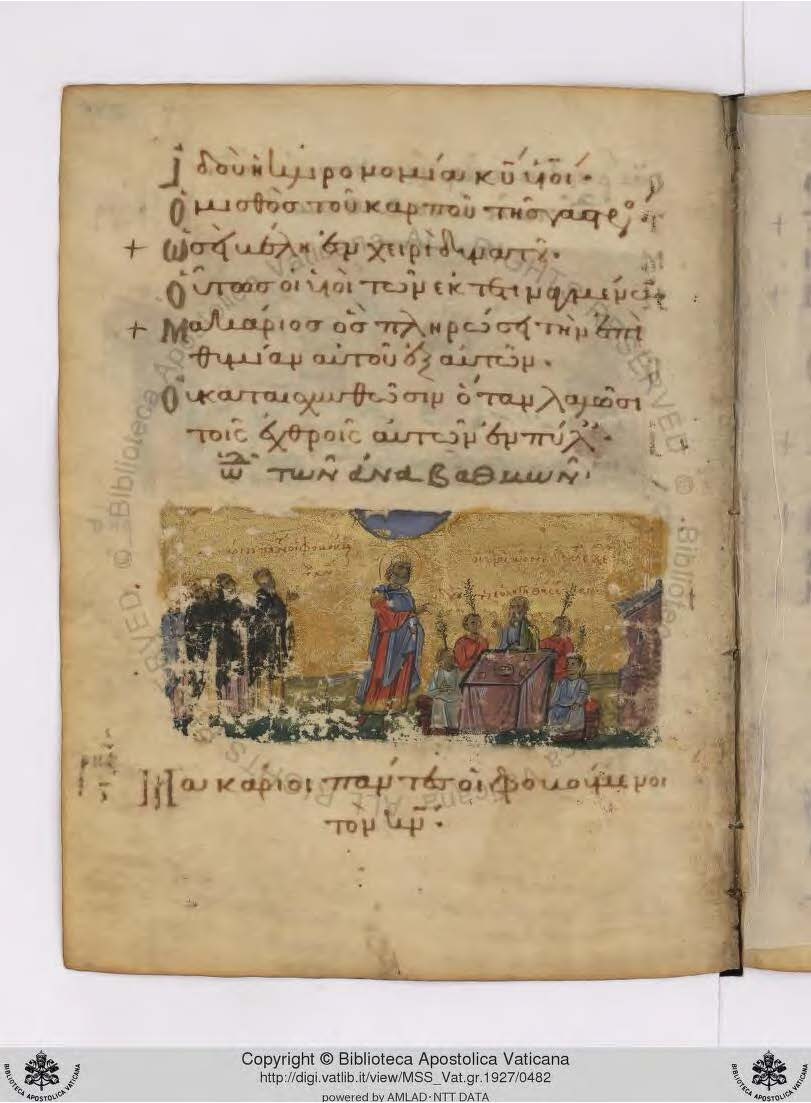
Figure 1. Vatican gr. 1927, folio 238 verso. Copyright Biblioteca Apostolica Vaticana.
Scholars who study psalter illustrations have labeled Vat. gr. 1927’s mode of illustration as predominantly “literal,” to describe the manner in which the miniatures directly illustrate the words of the psalms. A particularly apt example of this mode of illustration can be seen on folio 238 verso in the miniature for Psalm 127 (128) (Figure 1). On the left, monks raise their arms in prayer, while on the right, the blessed man sits at a table with children who have olive branches protruding from their heads, illustrating verse 3 of the psalm, which describes the children of the blessed man as being like olive plants. David stands in the center of the illustration and gestures towards the figures seated around the table. In general, there can be said to be three different strategies when illustrating psalters: David can be shown to participate in narrative scenes; narrative or other types of illustration can be used that do not contain David; or David can be presented as the narrator. Vatican gr. 1927 chooses the third mode far more often than any other illustrated psalter. In addition to the so-called “literal” illustrations, scattered throughout the manuscript are scenes from the life of David, as well as other subjects drawn from the Old Testament. It is notable that there are relatively few illustrations that contain New Testament subjects. [7] While the latter feature means the typological relationship between Christ and David is not emphasized in this manuscript, we will nevertheless see that, compositionally, the relationship of David to Christ is a major part of the illustrations. Indeed, as already noted, the most salient feature of Vatican gr. 1927’s miniatures is the role that David plays in the images.
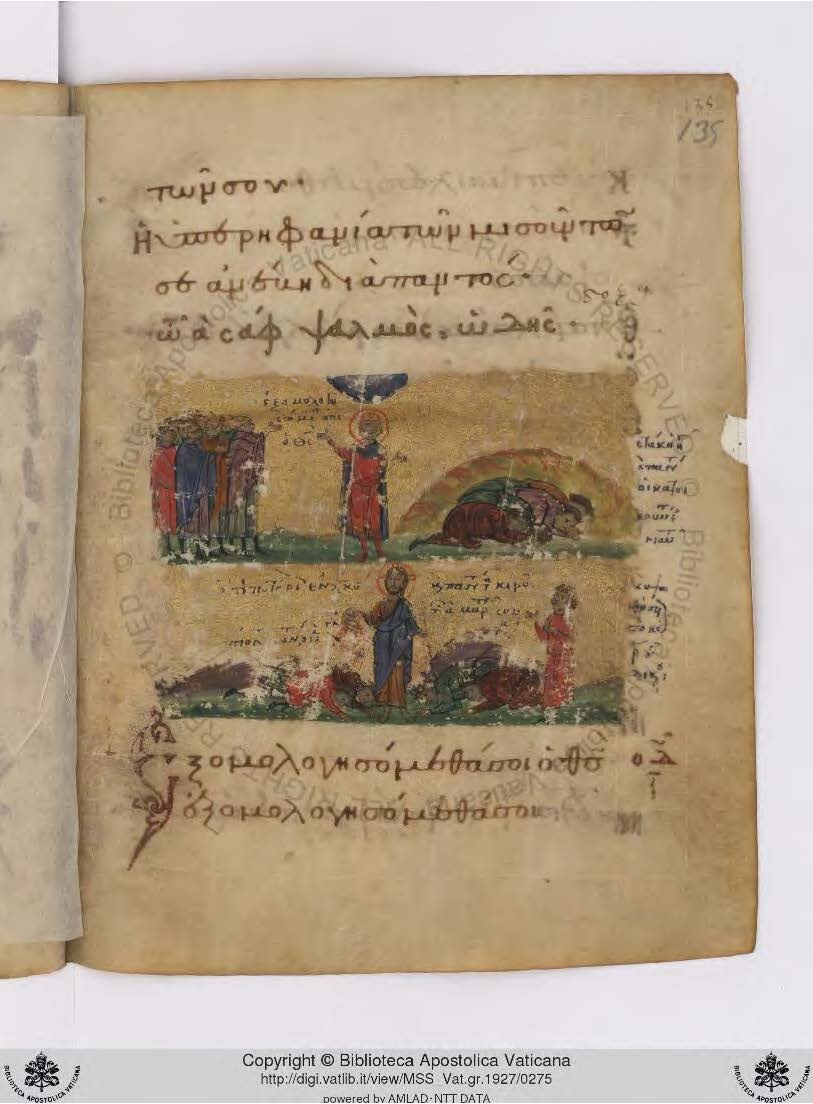
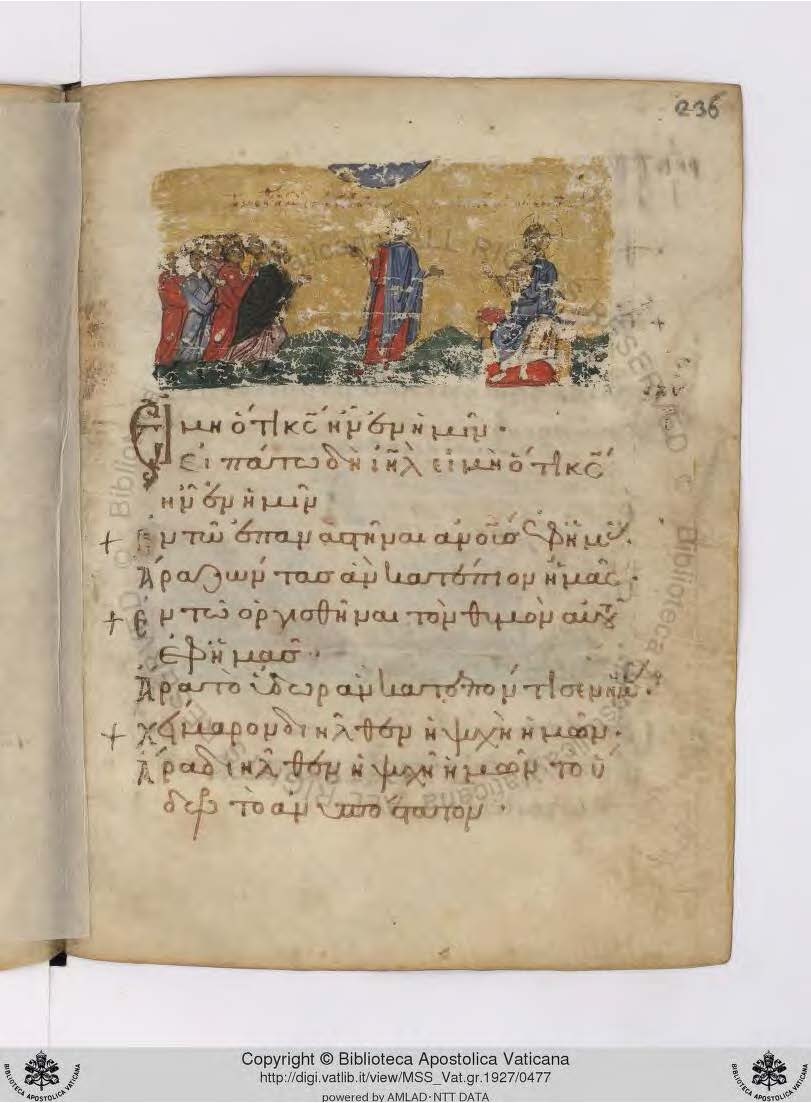
Figure 2. Vatican gr. 1927, folio 135 recto. Copyright Biblioteca Apostolica Vaticana.
Figure 3. Vatican gr. 1927, folio 236 recto. Copyright Biblioteca Apostolica Vaticana.
Within the miniatures, David is often placed on an axis with Christ in Heaven. And frontality is almost always reserved for Christ and David. We see this in the miniature on folio 135 recto where, in the upper zone of the miniature for Psalm 74, David stands between a group of men who raise their hands to heaven, while on the other side a group prostrate before fire (Figure 2). Below this scene Christ stands between two groups who prostrate before him. The visual relationship that is posited between David and Christ throughout the manuscript effectively presents David as intermediary between Christ and humankind. In an illustration on folio 236 recto, a frontally posed David stands between Christ enthroned and a group of worshippers, gesturing simultaneously to the figures on either side of him (Figure 3). The inscription, taken from Psalm 123 (124), indicates the importance of having the Lord on one’s side.
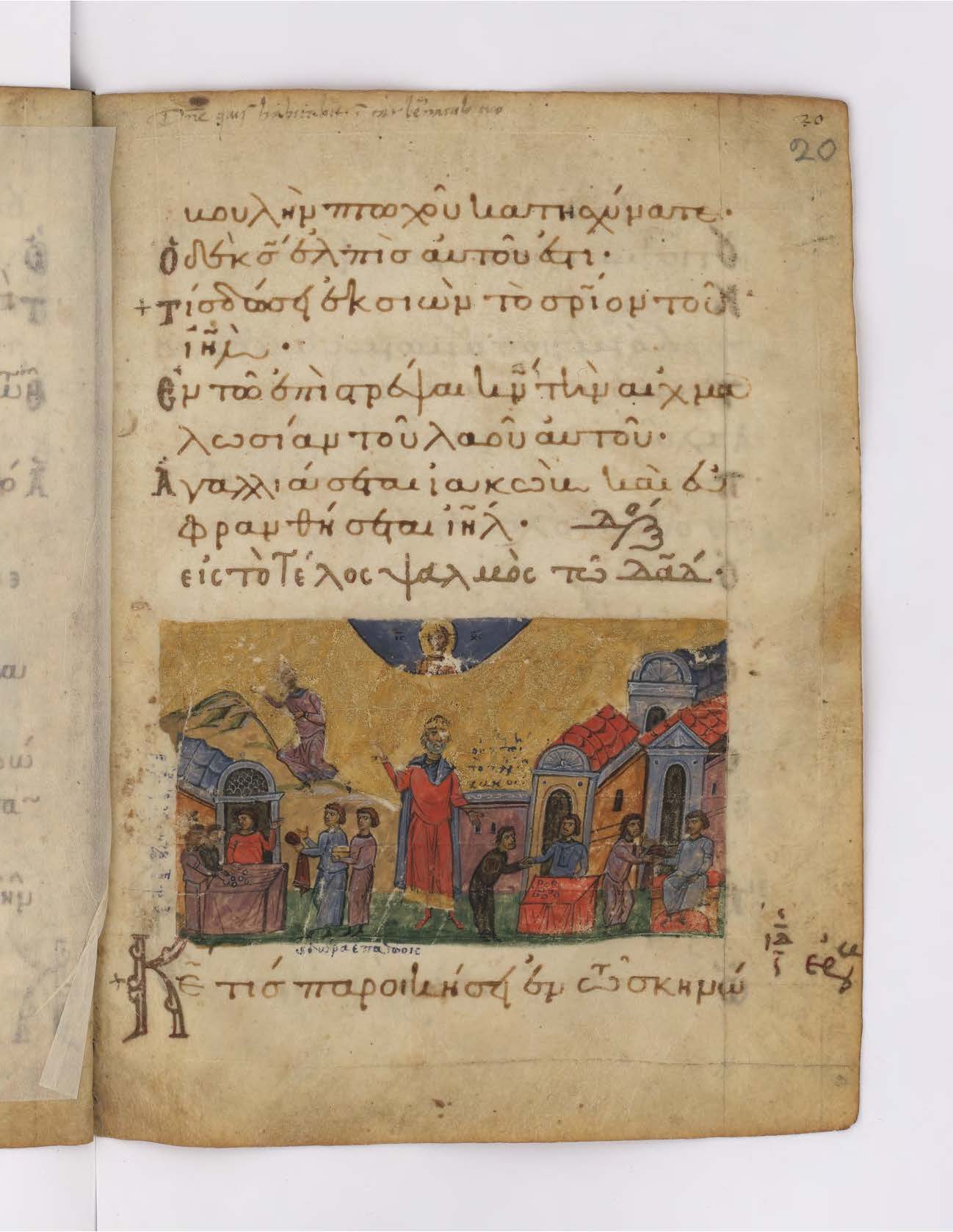
Figure 4. Vatican gr. 1927, folio 20 recto. Copyright Biblioteca Apostolica Vaticana.
The consistent visual motif of a frontally posed David in the center of an illustration, so that he directly addresses the viewer via gaze and gesture, is what sets this psalter apart from other illustrated psalters. The figure of David is also often larger than the other figures in the illustration, making him seem to straddle the viewer/reader’s space and the pictorial space. This is apparent on folio 20 recto, where David stands under a bust of Christ within the arc of heaven (Figure 4). He points to the upper left to the man who, in the words of Psalm 14 (15), ascends the holy hill, while below on either side of David, figures handle coins on tables as examples of those who either succumb to usury (on the right) or refrain from engaging in this sinful behavior (on the left).
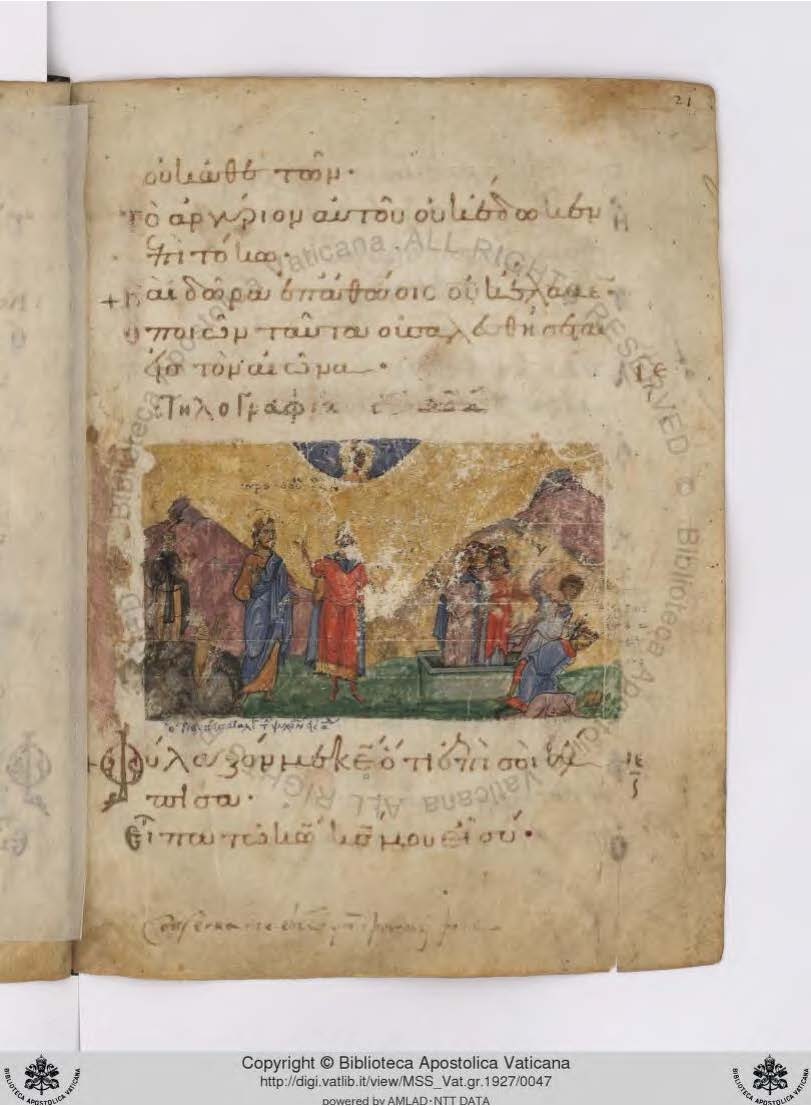
Figure 5. Vatican gr. 1927, folio 21 recto. Copyright Biblioteca Apostolica Vaticana.
As we see with these examples, some miniatures are quite complex, containing a variety of actions that relate to different verses of a psalm. In these illustrations, David serves as a visual anchor, indicating that he is the teller of these stories and that it is his voice which is here animated. On folio 21 recto David stands next to Christ, who also appears in an arc of heaven above (Figure 5). The different groups of figures on either side of Christ and David refer to a different verse from the psalm. The figures standing in a sarcophagus to the right must illustrate verse 10 of Psalm 15 (16) which refers to those whom the Lord does not allow to undergo decay, while further right two figures are being executed, possibly a reference to those whose sorrows are multiplied because they worship another god (verse 4). The standing Christ turns slightly toward David, while also directing his gaze toward the Old Testament king, effectively illustrating verse 8 which speaks of receiving the Lord’s counsel. Significantly, Christ holds a scroll, an indication of the wise counsel he passes on to David. A pit with a naked figure opens at Christ’s feet, while a monk stands to the left. These elements can be interpreted as referring to verse 10 which mentions the soul in hell. David stands in the center of this complex miniature and, unlike Christ and the other figures, does not appear to take part in the narrative action of the scene, but rather faces the viewer and gestures to right and left. His direct address of the viewer/reader via gesture and frontal pose is that of an orator recounting the psalm verses. The fact that Christ appears twice, both as a frontal bust in heaven and as an active figure within the scene, alerts us to how these miniatures are conceived overall. Christ in the arc of heaven above can be said to be an extradiegetic figure, while the figure of Christ who turns to David and hands him a scroll is an intradiegetic figure. Although the psalms are not narrative texts, this terminology is appropriate to the miniatures which do stage a series of actions. In certain cases, the actions depicted are connected to stories, such as events from the life of David, while in other cases the actions give visual form to the ideas and themes contained in the lyrical psalm verses. David, like Christ, is both an intradiegetic and extradiegetic figure, and more often the latter.
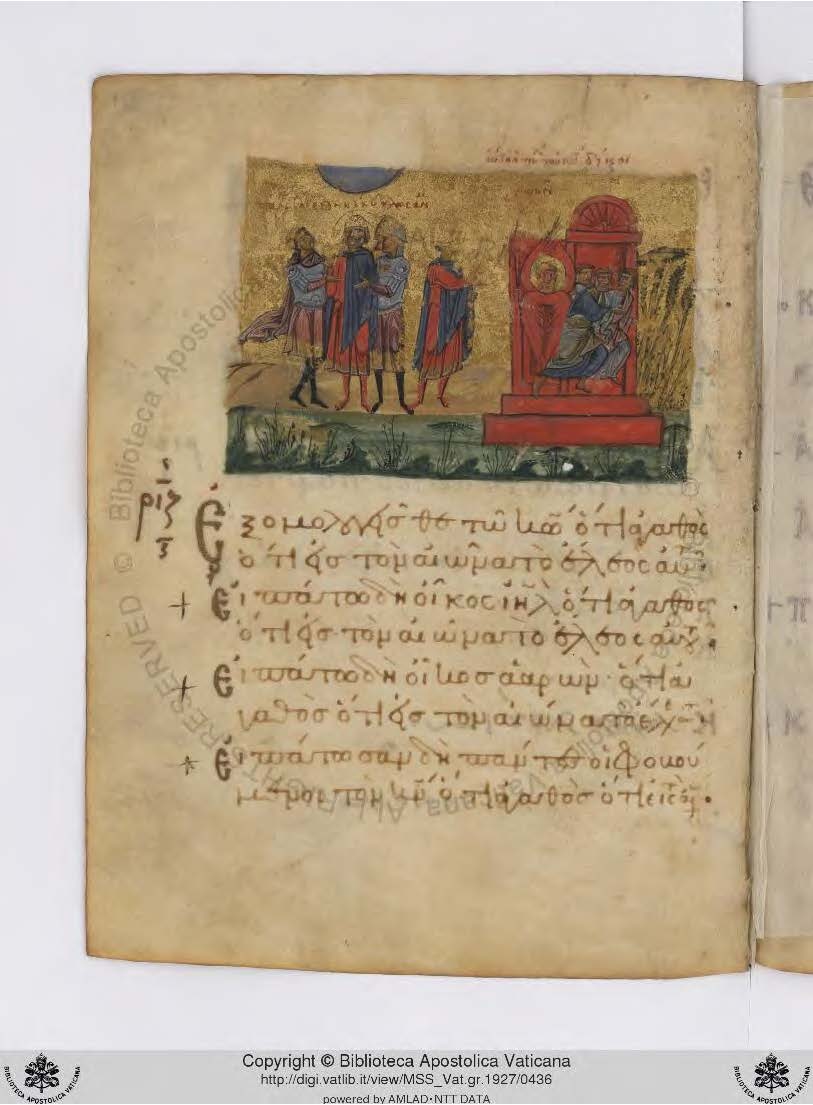
Figure 6. Vatican gr. 1927, folio 215 verso. Copyright Biblioteca Apostolica Vaticana.
There are a few instances when David both participates in the narrative action and serves as performative guide, as seen in the miniature for Psalm 117 (118) on folio 215 verso (Figure 6). At left David is flanked by soldiers who must represent “all the nations who surround me” referred to in verse 10 of the psalm. But he also stands in the center and gestures toward the gate of Paradise guarded by a cherub with sword (verse 20).
Only a few Byzantine psalters use similar visual devices and in a much more frugal manner. For instance, in one case in the Chludov and Barberini Psalters, David points to a scene of Christ and the Samaritan woman. [8] In another illustration in the Barberini Psalter, David points to the Communion of the Apostles. [9] In these examples, David does not stand frontally, or even turn his gaze to the viewer, but rather gestures while standing in profile or three-quarter view, his gaze directed to the figures in the miniature. In the Theodore Psalter, David’s primary role is to pray to Christ, rather than address the viewer. Also, unlike the Theodore Psalter where a number of figures are shown to recite the psalms, Vatican gr. 1927 emphasizes the authorship of David. David is the primary exemplum in Vatican gr. 1927, so that, unlike other eleventh- and twelfth-century psalters, the manuscript does not contain named saints. Confronted with a frontal David, together with inscriptions in the first person taken directly from the psalms, viewers would be encouraged to hear the psalms in David’s voice, his utterances voiced across the threshold of the picture and into the space of the viewer.
The above examples from Vatican gr. 1927 illustrate how David fulfills Richard Schechner’s definition of a performer as a “paradigm of liminality,” able to inhabit both the imaginary space of the narrative and the real space of the audience. [10] A useful analogy here could even be Brechtian theater in which the actor stands both inside and outside the events enacted, doing and showing at the same time. Brecht’s use of anti-illusive techniques (Verfremdungseffekt) was ultimately intended to stimulate the audience to reflect on what they were watching in a critical way, rather than be immersed in the narrative. It ensures the didactic element is kept at the forefront. [11] Thus, the types of illustrations used in Vatican gr. 1927 reinforce what I see as the particularly didactic function of the manuscript. The illustrations encourage the viewer/reader to engage with the psalter in an active and reflective manner.
Ultimately, David’s self-conscious performative stance presumes the presence of a viewer/reader and foregrounds the psalter text as having the potential for personal significance. Since the psalms are essentially prayers written in the first person, the text lends itself to this kind of personal engagement. Although Vatican gr. 1927 differs from other eleventh- and twelfth-century psalters in terms of the prominence and role of David within its miniatures, it does fit within the overall development of psalters during the eleventh century as a tool for personal devotion, with illustrations emphasizing moral lessons and the individual’s relationship with God. [12] In Vatican gr. 1927, it is David who orchestrates the viewer’s relationship with the divine. David’s gestures engage the viewer/reader and encourage him to reflect on the meaning of the text. The lengthy inscriptions, excerpted from the psalms, together with the performative stance of David within the miniatures, would guide the viewer in his contemplation of the psalms. Overall, it seems likely that Vatican gr. 1927 was intended for personal use. As a rule, the manuscript does not use typologies or subjects that connect with the liturgy, making it unlikely that it was meant for liturgical use. The size of the manuscript, as mentioned earlier, could also be compatible with both personal use and display. The book’s owner could contemplate the significance of the psalms for himself and his own life, with a performative David acting as a very personal guide who directly addresses him.
As I have asserted elsewhere, there are many reasons to believe the Vat. 1927 was produced in a monastic setting. [13] For instance, unusual subjects appear in the illustrations, such as a representation of monks climbing a ladder to reach Christ in heaven, obviously a reference to the Heavenly Ladder of John Climacus (folio 218 recto, Psalm 118 [119]), a subject that is not illustrated in any other Byzantine Psalter. We also see details of monastic life, such as scenes in which monks take their meals seated around a stone table (folio 256 verso, Psalm 144 [145]). It is obviously impossible to say whether the book was meant for use outside of a monastic setting. However, the sumptuousness of the 145 illustrations, with their gold ground, indicates at the very least the desire to create a luxury object for a special patron.
Although the “literal” illustrations of Vatican gr. 1927 cannot be said to be exegetical in the strict sense, they do make material and tangible the themes of the psalms via the acting out of psalm verses, accompanied by lengthy inscriptions that quote those verses. Because most of the illustrations are placed at the beginning of a psalm, the viewer/reader would have time to contemplate the image before reading the psalm or reciting it from memory. I believe that, in their “literal” depiction of the text, the illustrations could also serve as visual mnemonic devices to help the viewer/reader recall key passages of the psalter text and therefore focus on a particular set of themes. [14] The detailed illustrations, relating to several verses of a psalm, foreground the importance of learning the psalms word-for-word so as to be able to recite them. While Byzantine monks were required to recite the entire psalter from memory on a daily basis without the aid of a book, lay people are said to have carried their psalters with them. [15] Thus David’s performativity may suggest the user of the book was meant to read aloud, or recite psalms from memory, with the images as mnemonic triggers. [16] Seeing in images what you have read and vice versa is a way to cement the information in your brain. This process would be enhanced by a performative David, anchoring your experience of the text in an orator who specifically addresses you. [17] One is reminded of Theodore Stoudite’s funerary oration for his mother in which he praises her devotion to reading the psalms as a continuous conversation with David. [18] As David repeatedly models prayer and proskynesis, he calls upon the viewer/reader to become an equally performative agent in a process that suggests a melding of the viewer’s voice with that of the Old Testament king.
Because of Vatican gr. 1927’s foregrounding of David’s role as author and orator, it is interesting to note that, in eleventh-century Byzantine historiography, a trend has been observed toward the narrating of events through a prominent personality. [19] Related to this trend, Stratis Papaioannou notes the twelfth century is a time of proliferation of first-person rhetorical discourse. [20] In his study of Komnenian dedicatory epigrams, Ivan Drpić documents their increasing use of “I” speech in the context of what has been called the “autobiographical impulse” of the eleventh and twelfth centuries. [21] Drawing on the French linguist Émile Benveniste’s definitions of performative language, we can say that David is presented in Vatican gr. 1927’s miniatures as an example of figures that perform their authorship and establish an “I” in relation to the “you” of the viewer. [22] David is imbued with a sense of authoritative authorship that actively addresses the viewer, both visually via the images and via the first person psalter text. Certainly, the psalter was an important model of first-person text for the Byzantines. Vatican gr. 1927’s manner of illustration foregrounds this subjectivity, while also allowing for the merging of “I” and “you.” If the illustrations facilitate the recitation of the psalms on the part of the viewer/reader, while at the same time animate the voice of David, the latter becomes particularly important. Psalms, after all, are meant for self-reflection and meditation on the ideal self.
The psalter is indeed a very personal text in which David expresses his subjectivity and relation to the divine. The Patriarch Athanasios of Alexandria wrote of the psalms: “These words become like a mirror to the person singing them, so that he might perceive himself and the emotions of his soul.” [23] Like Athanasios of Alexandria, Symeon the New Theologian described the way in which divine scripture can provide a “mirror” with which to understand the self through models for imitation. [24] Symeon emphasized the personal nature of scripture in this regard. [25] He encouraged what Derek Krueger has termed interpellation, or self-questioning interior speech that is instrumental in the formation of the self. [26] The act of penitence is seen as integral to Byzantine notions of the self, and Symeon saw David as the prime example of a biblical penitent. [27] Images of sinful behavior abound in this psalter, offering the example to avoid. This is no doubt an aspect of the psalms that made them so integral to both monastic and lay devotion: they embody the day-to-day struggle with temptation, sin, and a desire for divine succor, derived ultimately through penance.
In writing about the particular power of the psalms to shape a “penitential self,” Derek Krueger has traced the way in which the Byzantines relied on biblical models as a means to construct a notion of the self. He has emphasized the importance for Byzantine subjectivity of preexistent models, referring to the psalms specifically as central to conceptions of the self in relation to God. [28] The reliance of Byzantine subjectivity on the reenacting of types and patterns (typoi and topoi) is further documented by Stratis Papaioannou through his work on Michael Psellos. [29] Indeed, the idea of presenting model selves was also very much part of Byzantine rhetorical training. [30] Because the psalms are sung or recited by both monks and laity alike, they can be said to constitute a primary means for the performance of the self on a weekly or, indeed, daily basis. I believe subjectivity, as it could ultimately be shaped through identification with David, would be enhanced by the illustrations in Vatican gr. 1927. Since David is the exemplum for prayer and proskynesis throughout the psalter, the repeated proskynesis required of the devout during recitation of the psalms would reinforce this identification on a somatic level. [31]
Ultimately, the performative David in Vat. gr. 1927 begs the question of audience. Because the Byzantine concept of rulership largely followed a Davidic model, the presentation of David in any medium would be a highly charged one. The Byzantine emperor was himself a performative persona who performed his office in a myriad of ways that underlined his liminal position via the earthly and celestial. Indeed, as Dagron has demonstrated, the emperor’s status vis-a-vis the spiritual was constantly being renegotiated and reenacted from the time of Constantine onward. The Book of Ceremonies, as well as later twelfth-century sources, provide details on the emperor’s spiritual role, blessing and receiving the censer from the patriarch during the mass, as well as delivering homilies. [32] In the twelfth century, Balsamon argued that unction bestowed episcopal rights (archieratikadikaia) on emperors. [33] Dagron writes that the imperial model of David allowed emperors to occupy a quasi-religious role because David himself was a prophet and intermediary between God and men. [34] I believe that David’s performative role in Vatican gr. 1927’s illustrations would make this a fitting manuscript to address an imperial audience, who, through the process of reciting psalms while observing the illustrations, would be confronted with his ideal self. The act of reading or reciting, performative in itself, accompanied by meditation on the images, would ultimately facilitate a merging of the imperial user of the book with his Biblical prototype. [35] While a strong case can be made for the monastic production of the manuscript, this certainly does not preclude it being intended for an imperial audience. It is also worth noting that, in the second half of the eleventh century, three emperors retired to monasteries. [36] Vatican gr. 1927, with its sumptuous illustration on gold ground, attests to its elite ownership. Regardless of whether the intended audience of the manuscript was lay or monastic, I see the illustrations of Vatican gr. 1927 as one of the most powerful attempts to fulfill the function of the psalter as the most personal of prayer books.

Bibliography

Alfeyev, Hilarion. 2000. St. Symeon the New Theologian and Orthodox Tradition. Oxford.
Anderson, Jeffrey. 1988. “On the Nature of the Theodore Psalter.” Art Bulletin 70:550–568.
Anderson, Jeffrey, Paul Canart, and Christopher Walter. 1989. The Barberini Psalter: Codex Vaticanus, Barberinianus Graecus 372. Zurich.
Angelov, Dimiter. 2006. Imperial Ideology and Political Thought in Byzantium, 1204–1330. Cambridge.
Barber, Charles. 2007. “In the Presence of the Text: A Note on Writing, Speaking, and Performance in the Theodore Psalter.” In Art and Text in Byzantine Culture, ed. Liz James, 83–99. Cambridge.
Benveniste, Émile. 2012. “Subjectivity in Language.” In Philosophy of Communication, ed. Briankle G. Chang and Garnet C. Butchart, 419–425. Cambridge.
Carr, Annemarie Weyl. 1989. “Illuminated Musical Manuscripts in Byzantium: A Note on the Late Twelfth Century.” Gesta 28:41–52.
Carruthers, Mary. 1998. The Craft of Thought: Meditation, Rhetoric, and the Making of Images, 400–1200. Cambridge.
Crostini, Barbara, and Glenn Peers, eds. 2016. A Book of Psalms from Eleventh-Century Byzantium: The Complex of Texts and Images in Vat. Gr. 752. Vatican City.
Cutler, Anthony. 1977. “The Byzantine Psalter: Before and After Iconoclasm.” In Iconoclasm, ed. A. Bryer and J. Herrin, 93–102. Birmingham.
Dagron, Gilbert. 2003. Emperor and Priest: The Imperial Office in Byzantium. Trans. Jean Birrell. Cambridge.
De Wald, Ernst. 1941. The illustrations in the Manuscripts of the Septuagint. Vol. III, 1, Vaticanus Graecus 1927. Princeton.
Drpić, Ivan. 2014. “The Patron’s ‘I’: Art, Selfhood, and the Later Byzantine Dedicatory Epigram.” Speculum 89:895–935.
Flood, Gavin. 2004. The Ascetic Self: Subjectivity, Memory and Tradition. Cambridge.
Gibson-Wood, Carol. 1987. “The Utrecht Psalter and the Art of Memory.” Canadian Art Review 14:9–15.
James, Liz. 2003. “Art and lies: text, image and imagination in the medieval world.” In Icon and Word: The Power of Images in Byzantium, ed. Liz James and Antony Eastmond, 59–72. Aldershot.
Kazhdan, Alexander P., and Giles Constable. 1982. People and Power in Byzantium: An Introduction to Modern Byzantine Studies. Washington, DC.
Kazhdan, Alexander P., and Ann Wharton Epstein. 1985. Change in Byzantine Culture in the Eleventh and Twelfth Centuries. Berkeley.
Krueger, Derek. 2014. Liturgical Subjects: Christian Ritual, Biblical Narrative, and the Formation of the Self in Byzantium. Philadelphia.
Lowden, John. 1988. “Observations on Illustrated Byzantine Psalters.” Art Bulletin 70:242–-260.
Mullett, Margaret. 2004. “Constructing Identities in Twelfth-Century Byzantium.” In Byzantium Matures: Choices, sensitivities, and modes of expression (eleventh to fifteenth centuries), ed. Christine Angelidi, 129–144. Athens.
Papaioannou, Stratis. 2010. “Byzantine Mirrors: Self-Reflection in Medieval Greek Writing.” Dumbarton Oaks Papers 64:81–101.
———. 2013. Michael Psellos: Rhetoric and Authorship in Byzantium. Cambridge.
Parpulov, Georgi R. 2010. “Psalters and Personal Piety in Byzantium.” In The Old Testament in Byzantium, ed. Paul Magdalino and Robert Nelson, 77–105. Washington, DC.
———. 2017. “The Rise of Devotional Imagery in Eleventh-Century Byzantium.” In Byzantium in the Eleventh Century: Being in Between, ed. Marc D. Lauxtermann and Mark Whittow, 231–247. London.
Schechner, Richard. 2013. Performance Studies: An Introduction. London.
Shchepkina, M.V. 1977. Miniatjury Khludovskoi Psaltiri. Moscow.
Sheingorn, Pamela. 2008. “Performing the Illustrated Manuscript: Great Reckonings in Little Books.” In Visualizing Medieval Performance: Perspectives, Histories, Contexts, ed. Elina Gertsman, 57–82. Burlington.
Sheingorn, Pamela, and Robert L. A. Clark. 2002. “Performative Reading: The Illustrated Manuscripts of Arnoul Gréban’s Mystere de la Passion.” European Medieval Drama 6:129–154.
Stoudite, Theodore. “Laudatio funebris in matrem suam” n. 3, PG 99, 885.
Trahoulia, Nicolette S. 2016. “Vat. Gr. 752 and Vat. Gr. 1927: Related Manuscripts?” In Crostini and Peers 2016:547–567.
Varden OCSO, Erik. 2016. “Cum Davide Versari. The Psalter as Acquired Self-Expression.” In Crostini and Peers 2016:229–240.
Walter, Christopher. 1988. “Latter-day’ Saints in the Model for the London and Barberini Psalters.” Révue des études Byzantines 46:211–228.
Weller, Anna Linden. 2018. “Ideological Storyworlds in Byzantium and Armenia: Historiography and Model Selves in Narratives of Insurrection.” In Storytelling in Byzantium: Narratological Approaches to Byzantine Texts and Images, ed. Ingela Nilsson, Chares Messis, and Margaret Mullett, 71–87. Uppsala.

Footnotes

[ back ] * The author would like to thank the Institute for Hellenic Culture and the Liberal Arts, Deree College – The American College of Greece for funding the cost of illustrations.
[ back ] 1. Parpulov 2010:77–105.
[ back ] 2. De Wald 1941; Cutler 1977:94, 97; Lowden 1988:246; Weyl Carr 1989:43, 51n50; Trahoulia 2016:547–567.
[ back ] 3. Anderson 1988:566; Walter 1988:213; Barber 2007:83–99.
[ back ] 4. Weyl Carr 1989:51n50.
[ back ] 5. De Wald 1941:iii; Weyl Carr 1989:43, 48, 51; Trahoulia 2016:550.
[ back ] 6. An exception is the Vatican Psalter gr. 752: Trahoulia 2016:547.
[ back ] 7. Trahoulia 2016:550n8.
[ back ] 8. Chludov Psalter (Moscow, Hist. Mus. MS. D. 129) folio 33recto: Shchepkina 1977; Barberini Psalter (Vatican barberini gr. 372) folio 60 verso: Anderson, Canart, and Walter 1989.
[ back ] 9. Barberini Psalter (Vatican barberini gr. 372) folio 194 recto: Anderson, Canart, and Walter 1989.
[ back ] 10. Schechner 2013:146.
[ back ] 11. Schechner 2013:146.
[ back ] 12. Anderson 1988:550, 565–566; Walters 1988:213–214; Parpulov 2017:231–247.
[ back ] 13. Trahoulia 2016:560–562.
[ back ] 14. The Utrecht Psalter has been studied in this way as having illustrations which serve as “imagines verborum.” Carruthers 1998:226–227.
[ back ] 15. Parpulov 2010:70–72, 75, 90.
[ back ] 16. Gibson-Wood 1987:9–15.
[ back ] 17. Mary Carruthers writes that medieval rhetorical handbooks emphasize the orator’s role in helping his listener’s recall what is heard through gesture and facial expression: Carruthers 1998:94. For the role of the orator in the visual culture of Byzantium, see James 2003:61–62.
[ back ] 18. Theodore Stoudite n. 3, PG 99, 885.
[ back ] 19. Linden Weller 2018:73.
[ back ] 20. Papaioannou 2013:247.
[ back ] 21. Drpić 2014:908–910. Drpić sees the “autobiographical impulse” of the eleventh and twelfth centuries as an indication not of a new sense of subjectivity but rather a desire for a more personal and affective form of self-expression.
[ back ] 22. Benveniste 2012:419–425, esp. 421–423.
[ back ] 23. Quoted in Krueger 2014:17. See also Varden, OCSO 2016:230–231.
[ back ] 24. Papaioannou 2010:84–85.
[ back ] 25. Alfeyev 2000:49–50, 67–71. Alexander Kazhdan interpreted the works of Symeon as one of the indications of a shift in the eleventh century toward a concern for individuality. Krueger 2014:213; Kazhdan and Constable 1982:62; This notion of the development of individuality is fully outlined in Kazhdan and Wharton Epstein 1985. For a critique, see Mullett 2004:129–144. See also note 19 in this chapter.
[ back ] 26. Krueger 2014:200.
[ back ] 27. Krueger 2014:204.
[ back ] 28. Krueger 2014:17–19.
[ back ] 29. Papaioannou 2013:135–136.
[ back ] 30. Weller 2018:73–74.
[ back ] 31. Flood 2004:179–188, 220–221. Symeon the New Theologian described rigorous discipline of the body as integral to proper prayer: Alfeyev 2000:79–80. For sources from the eleventh through the fourteenth centuries that describe the repeated prostrations of the devout while reciting the psalms, see Parpulov 2010:74, 112–114, 118.
[ back ] 32. Dagron 2003:264–265; Angelov 2006:357–362.
[ back ] 33. Dagron 2003:267. For a discussion of challenges to the episcopal power of the ruler starting in the eleventh century, see Angelov 2006:361–363.
[ back ] 34. Dagron 2003:272.
[ back ] 35. On reading as performative, see Sheingorn and Clark 2002:129–154; Sheingorn 2008:57–82.
[ back ] 36. These emperors are Isaac I Komnenos in 1059, Michael VII Doukas in 1078, and Nikephoros III Botaneiates in 1081. One of the three psalter prefaces written by Psellos is dedicated to Michael VII Doukas: see Parpulov 2010:66. For a close analysis of the theme of temporal versus spiritual authority in the illustrations of Vatican gr. 1927, see Trahoulia 2016:547–567.