
Zarras, Nektarios. 2025. “Performativity and Theatricality in Palaiologan Iconography: The Composition of the Temptations of Christ in the Chora Monastery.” In “Emotion and Performance in Late Antiquity and Byzantium,” ed. Niki Tsironi, special issue, Classics@ 24. https://nrs.harvard.edu/URN-3:HLNC.ESSAY:104135623.
This dense recounting of events through small episodes which are enacted in a narrow spatial-temporal frame, can be classed in two basic types: in the first the episode is narrated visually with what we could call a textual structure—that is, with scenes that play the role of prologue, main subject and epilogue. [3] Paramount example by the two brilliant masters of narrativity, Michael Astrapas and Eutychios, is the splendid composition of the Dormition of the Virgin on the west wall of the Peribleptos in Ochrid (1295) (Figure 1). [4] The angel’s announcement of the death of the Theotokos and the sharing out of her garments to poor women are the introductory events, the representation of the Dormition is the central subject, and the burial of the Virgin is the epilogue. The same textual structure of the narration is encountered also in smaller iconographic formats, such as the sub-cycles that compose the Passion cycle [5] or, more specifically, the story of the Appearance of Christ on the Way to Emmaus. Prologue is the Journey to Emmaus, central subject the Supper, and epilogue Luke and Kleopas informing the apostles. [6] The second type of visual narration, on which I shall focus here, is the presentation of one event by illustrating several episodes, each of equal significance, which take place in successive moments in time. [7] In other words, these are different phases or moments of the same event. [8] Among the ideal expressions of this kind of narration is the composition of the Temptations of Christ, in the second bay of the exonarthex in the Chora monastery in Constantinople (1310/15). [9] The painter divided the surface of the domical vault down the middle, in order to accommodate two compositions: that of John Bearing Witness to Christ, in the north half, and that of the Temptations of Christ, in the south half. We can distinguish the two compositions because the painter has created a small gap between them, using architectural and natural elements of them as separator (Figure 2).
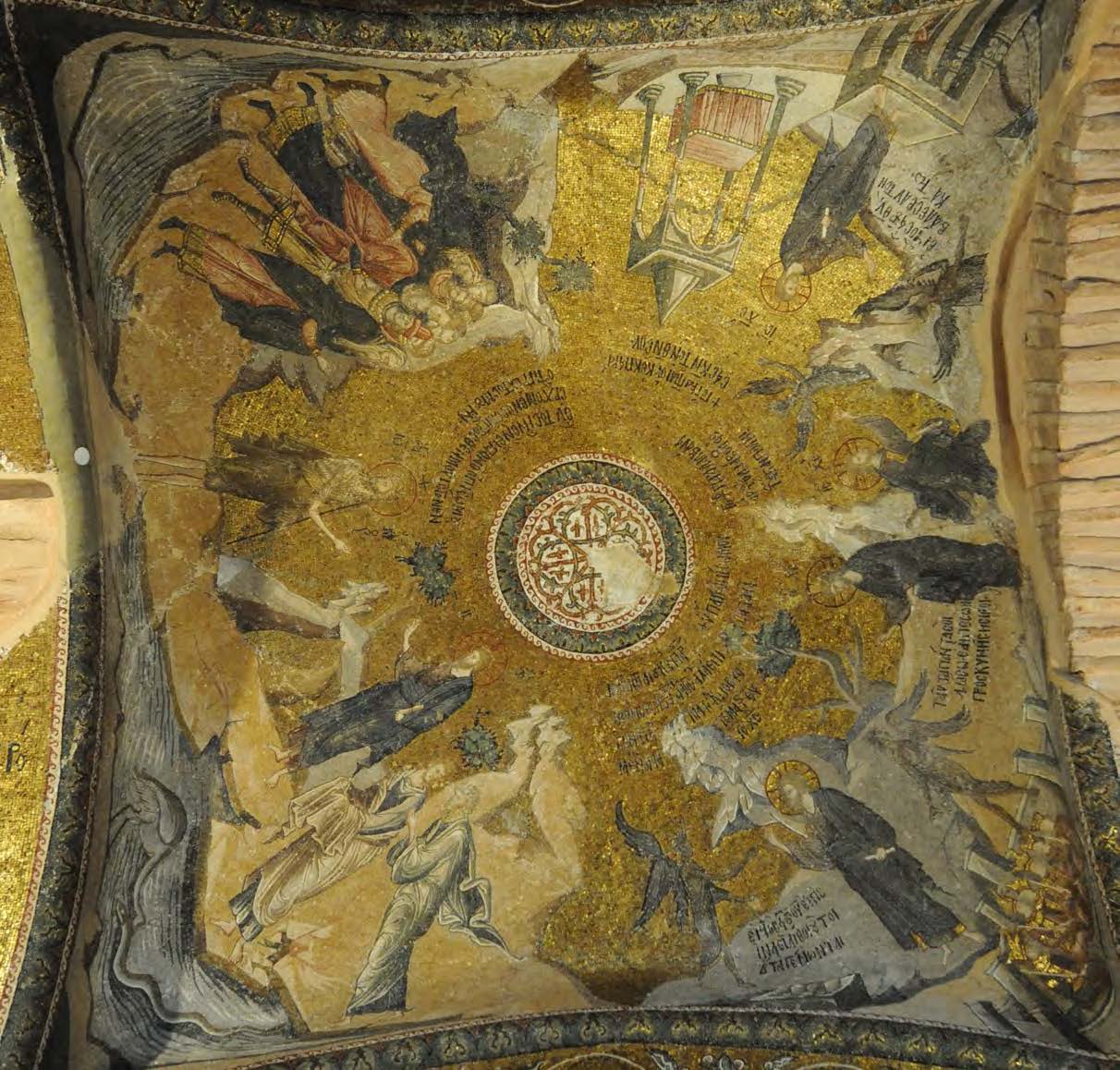
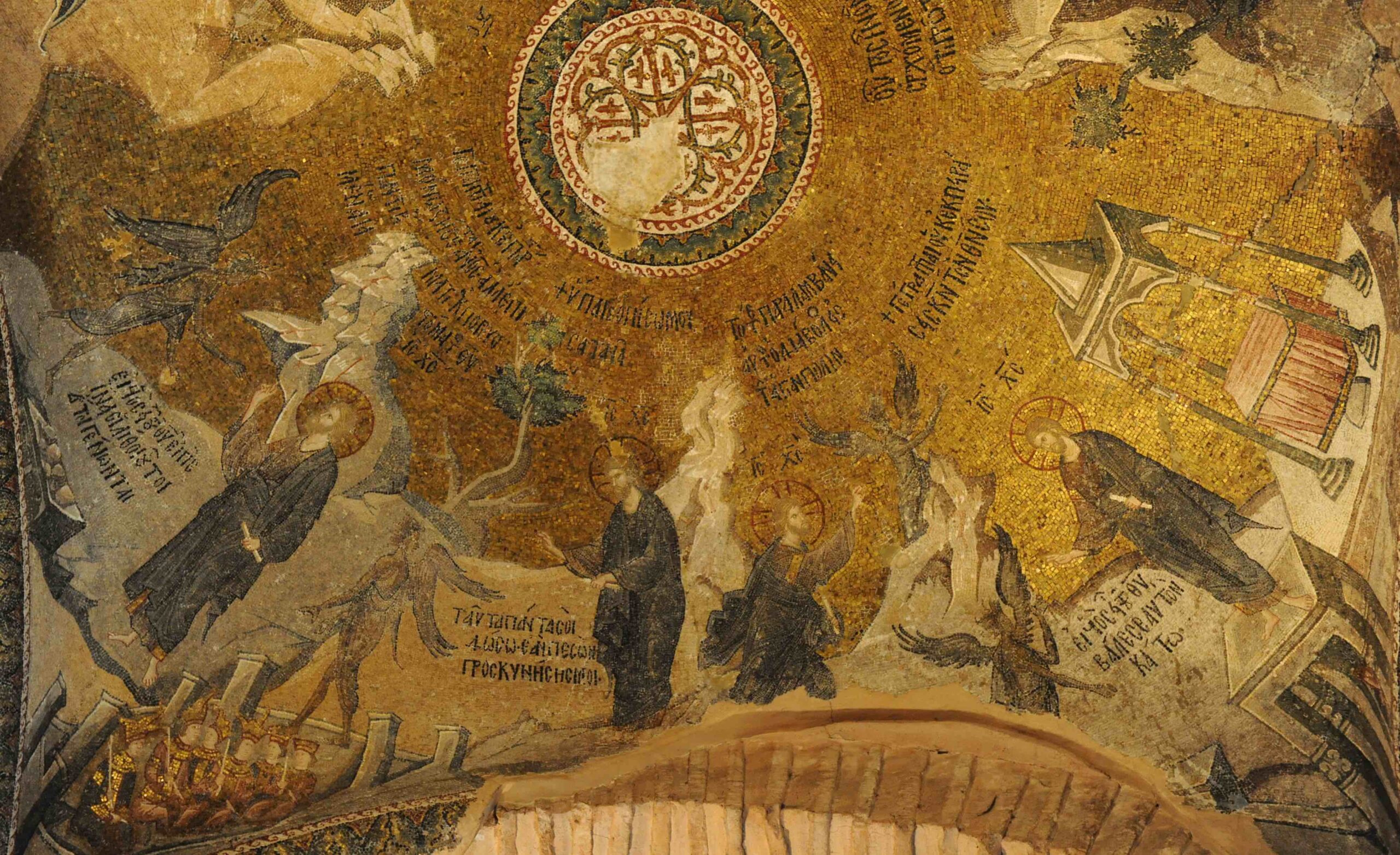
The major challenge for the Chora painter was to depict such a demanding composition on a single large surface with just two figures as protagonists, in contrast to the host of figures in the Koimesis representation in the Peribleptos. In Chora we have a theatrical duet between the Devil and Christ. The basic material for its successful rendering exists in the Gospel text, which conveys the dramatic atmosphere but is spare in description, placing emphasis on the dialogues, without entering into details about the emotional state of the protagonists. [11] The talented painter of Chora utilizes the text to the full, emphasizing the performativity of the figures, which he reproduces in different moments of the event. His intention of creating striking elements, in order to counterbalance the repetition of the figures, is achieved thanks to the superb setting which covers half the surface of the second domical vault. By employing the Gospel text as the basic scenario of the representation, the painter creates four episodes (Figure 3) for the three temptations that Christ receives from Satan, so differentiating the Chora composition from every preceding representation. [12]
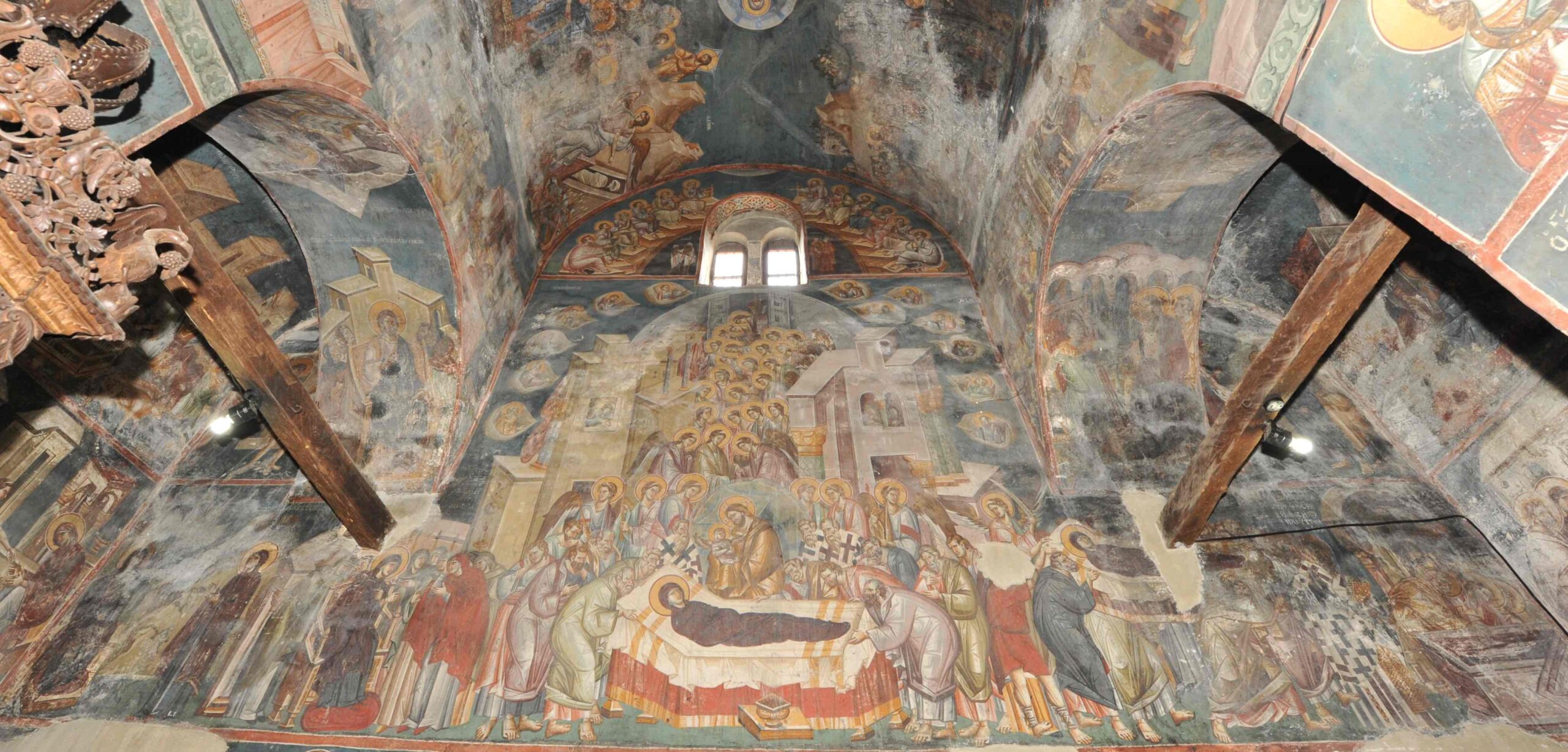
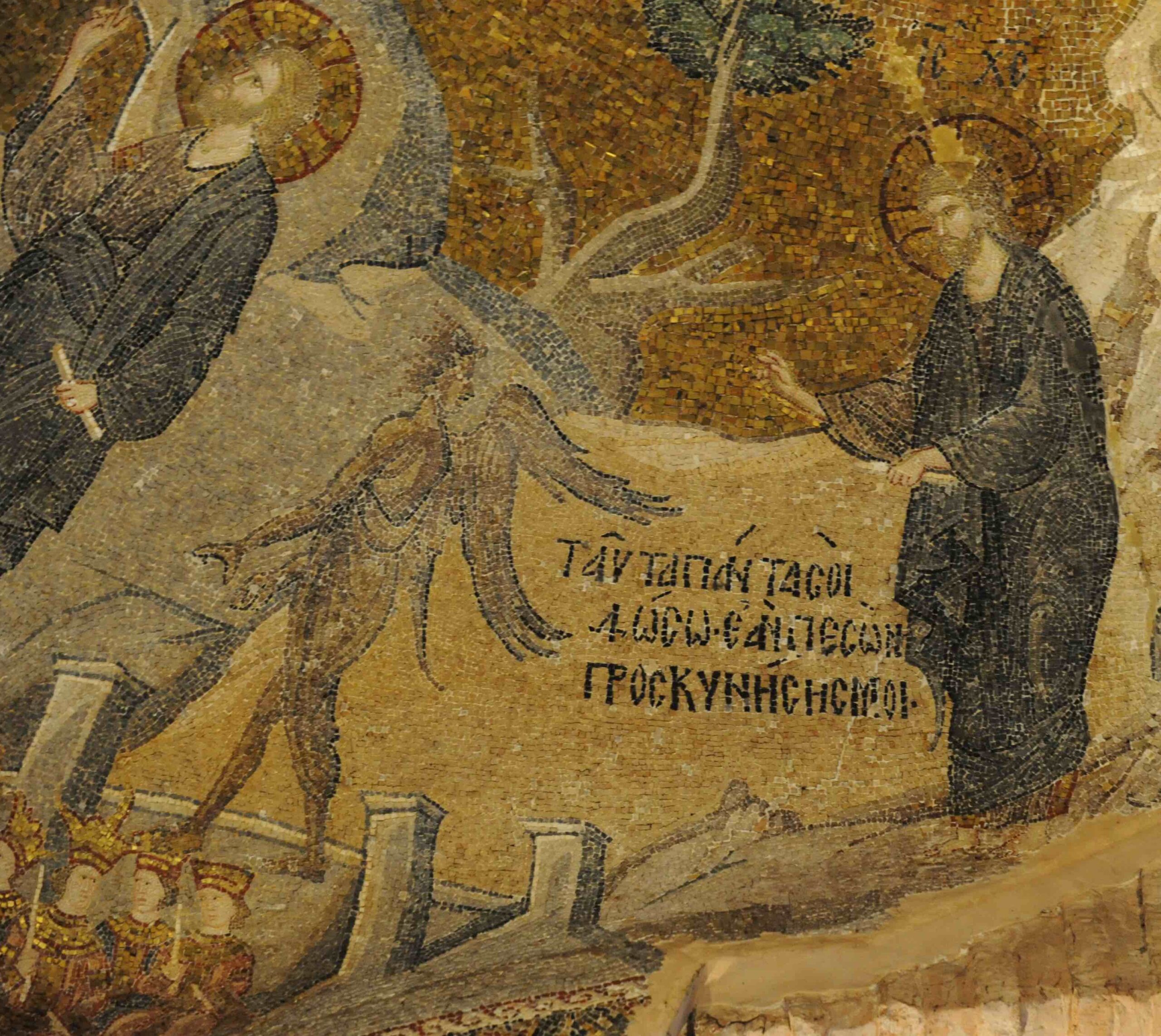
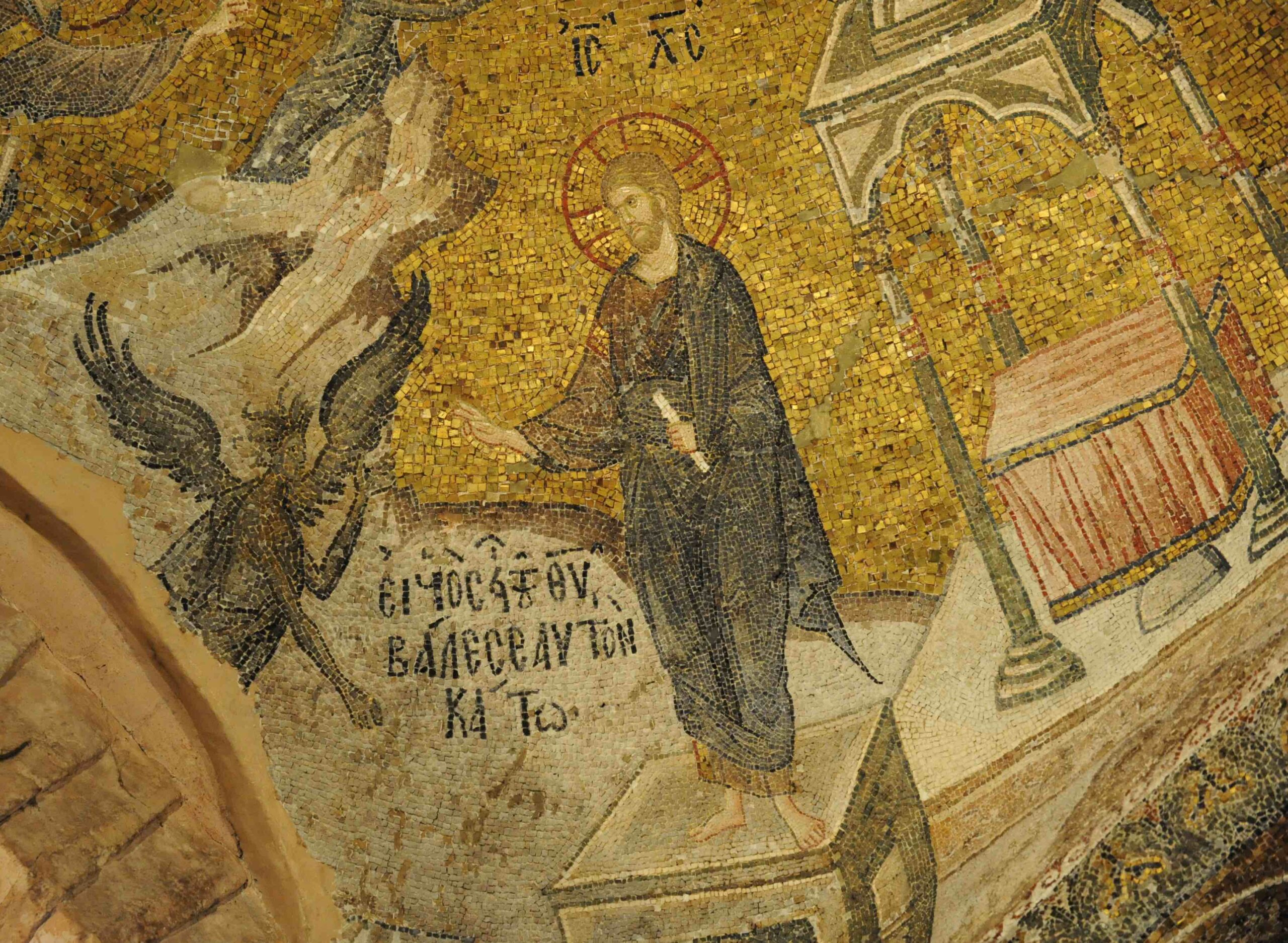
A basic trait of the performativity is the variety in the ways in which the figures move, gesticulate, and express their emotions in each episode. Sophisticated statement of the visual fullness and innovativeness in the conception of the composition is that motion conveys the psychological state and the different character and sentiments of the two protagonists. The repulsive figure of Satan moves (Figure 4) spasmodically, appears suddenly, and jumps out from different points in the rocky landscape. [13] His movement and his gestures are exaggerated, revealing, like his facial expression, the basic reason for his presence and his aim, as related in the Gospel text. Through provocation, deceit, and mockery, he tries hard to trap Christ. Dominant in the depictions of Satan is his obvious intention of bringing Christ into a state that he has energetically striven to avoid throughout his life. The Devil tries to tempt him into displaying his divine power, so submitting to his demands. The dark creature with his sharp features avoids facing Christ directly and confronting him on an equal footing. [14] He exploits the rocky and uneven terrain so as to change position continuously, overtly creating an atmosphere of lies and deceit, in which he attempts to lure Jesus. Satan’s theatrical pose, his disheveled hair, and the constantly changing gestures of his hands create a sense of unrest and nervousness, so as to enable him to snare Christ and break his resistance.
To the contrary, the figure of Christ in all four depictions of him is distinguished generally by stability. In the first two episodes and the fourth, which correspond to the three temptations, Christ moves calmly and through his divine power deals serenely with the Devil’s provocations. The painter renders the more general feeling that he gains from the Gospel text and depicts Christ conversing and giving his stern answers, particularly to the first temptation. Although his expression denotes self-control and restraint in dealing with the temptations, obvious too is the irritation aroused by the derisive demeanor of his adversary. The escalation of emotion and the increasing tension are overt after the second temptation. In contrast to the immediately preceding depiction, Christ’s especially somber manner, which is accompanied by gestures revealing his exasperation and psychological disturbance (Figure 5), so that he almost chases Satan, are telling instances of performativity in depictions of Christ in Palaiologan painting. The juxtaposition of sentiments and movements is heightened by the treatment of the mountainous environment as a staged backdrop, which, as happens mainly in Palaiologan art, the painter adapts to the plot of the storytelling, so as to achieve a dramatic effect. [15]
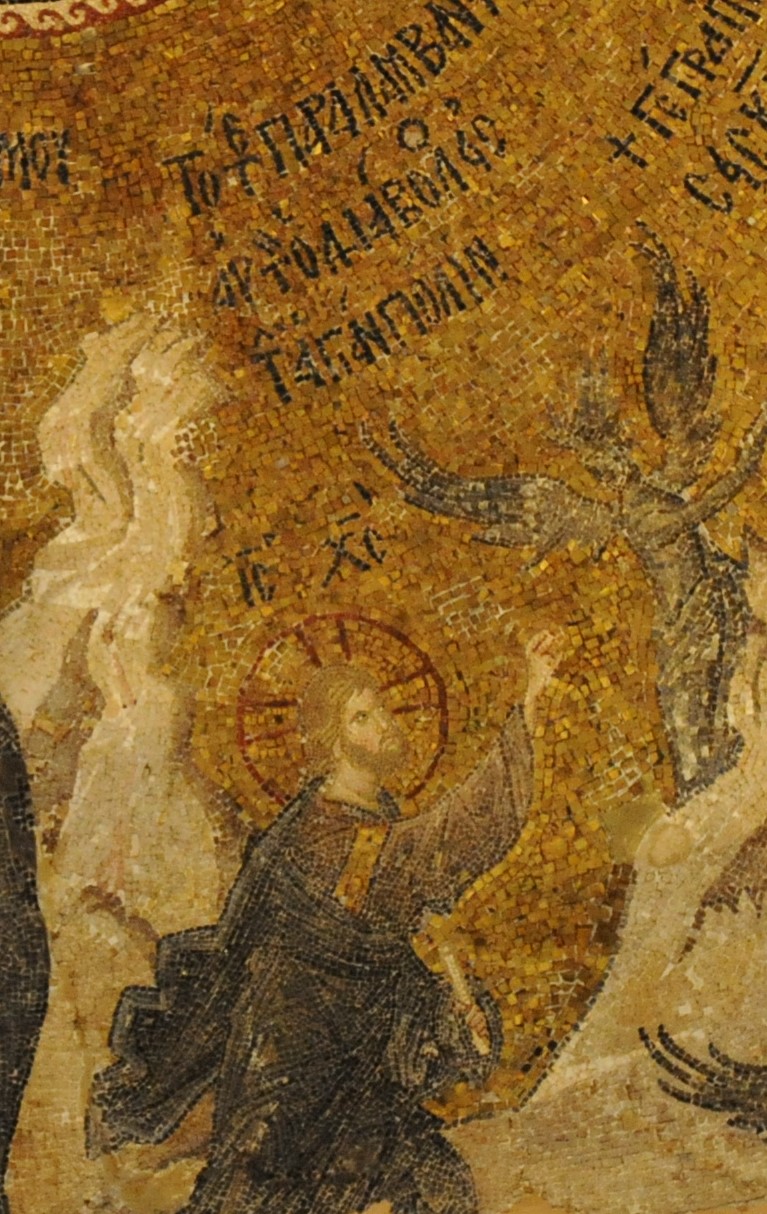
Returning to our composition, after the second temptation, the dialogue between Christ and Satan is interrupted and the inscription that follows changes style and content. From the dialogue we pass to the narration of the Gospel story. Τhe text of the inscription above the third episode (Figure 5) and the figure of Christ, which copies the Gospel text, is presented by an external narrator.
Then the devil taketh him up into the holy city [18]
This inscription demonstrates the contribution of the Gospel text as primary source not only for depicting the four episodes, but also for the theatricality of the composition as a whole. However, we should ask whether the Gospel text was sufficient for the creation of this remarkable composition. Without doubt the painter was capable of turning text into image and of creating a splendid composition with all the traits noted above. The painter’s handling of the text, the figures, and the landscape create a unique composition.
In Chora, the natural landscape and the buildings are placed as if in a stage set, not only playing the role of backdrop but also participating in the action of the protagonists, thus contributing to the development of the narrative. The inhospitable stony desert, where the endurance and resistance of even the Son of God are put to the test, becomes the ideal locus of the eternal conflict between Good and Evil, with the tormented Christ repelling the provocative Satan, who leaps out from between the rocks. Τhe theatrical character of the visual narrative is continued until the end of the composition, with the wonderful setting in the last episode relieving the dramatic tension.
The composition of the Temptations in its final form also carries the stamp of the patron of Chora, Theodore Metochites, who collaborates with the painter so that the patron’s views are imprinted not only in the composition of the Temptations but in the entire iconographic program, as I have shown elsewhere. [26] Metochites’ contribution to the enrichment of the composition is decisive, and the patron emphasizes a more philosophical approach to the eternal struggle between Good and Evil. This universal clash is a favorite theme in Metochites’ literary works, namely his poems and his treatise: Ἠθικòς ἤ Περὶ Παιδείας (Moral Treatise or On Education). [27] His first poem begins with a prolix prayer to God in which he describes in epic terms the struggle between Good and Evil, caused by the devilish forces whose aim is to destroy the material and spiritual gifts of God to Mankind. [28] Divine power and divine wisdom are victorious over the forces of darkness:
Satan’s actions, which are manifested in human life sometimes in the form of illness of the body and spiritual death, sometimes by the envy that leads man to destruction and his condemnation to Hell, the kingdom of darkness, are dominant subjects throughout Metochites’ literary oeuvre. [30] In order to describe this great adventure of human existence, the patron of Chora dramatizes his poetry, but at the end there is always the certainty of the defeat of the daemonic forces, due to the divine majesty of the Almighty, which leads to salvation. Indeed, the motif of devilish energy in man and the redemption offered by Christ becomes at once central theme and characteristic denouement in many of Metochites’ poems:
This dynamic presence and apparent dominance of Satan, as presented in the Chora composition, can be correlated with Metochites’ Moral Treatise, in which he argues that, notwithstanding the preeminence of Evil, in the end it is Good that prevails in society:
In conclusion, we should point out mainly the maturing in monumental painting, around the mid-thirteenth century, of the artistic means and above all the painters’ desire to enhance narrativity in the most performative manner. The course of painting in the preceding centuries had prepared the way for this performativity, through the visual narration, and the painters sought through their art to attain the climax in presenting the figures in motion and with pluralistic facial expression by evolving and surpassing the Middle Byzantine stereotype of sorrow and pain. Research should not underestimate the fact that the Gospel text and the painters’ talent were the two principal reasons for achieving theatricality in the Palaiologan period. Other factors that possibly favored the performative presentation, such as the drama or the rhetorical discourse in aristocratic salons, [33] function circumstantially and in combination with the education of the patron or the spiritual creator of the program and do not constitute the basic reason for the theatricality.